 iOS App
  Android App
 Study tips
The Testing Effect: Why Predicting Exam Questions Makes You Better at Answering Them
Piply Team
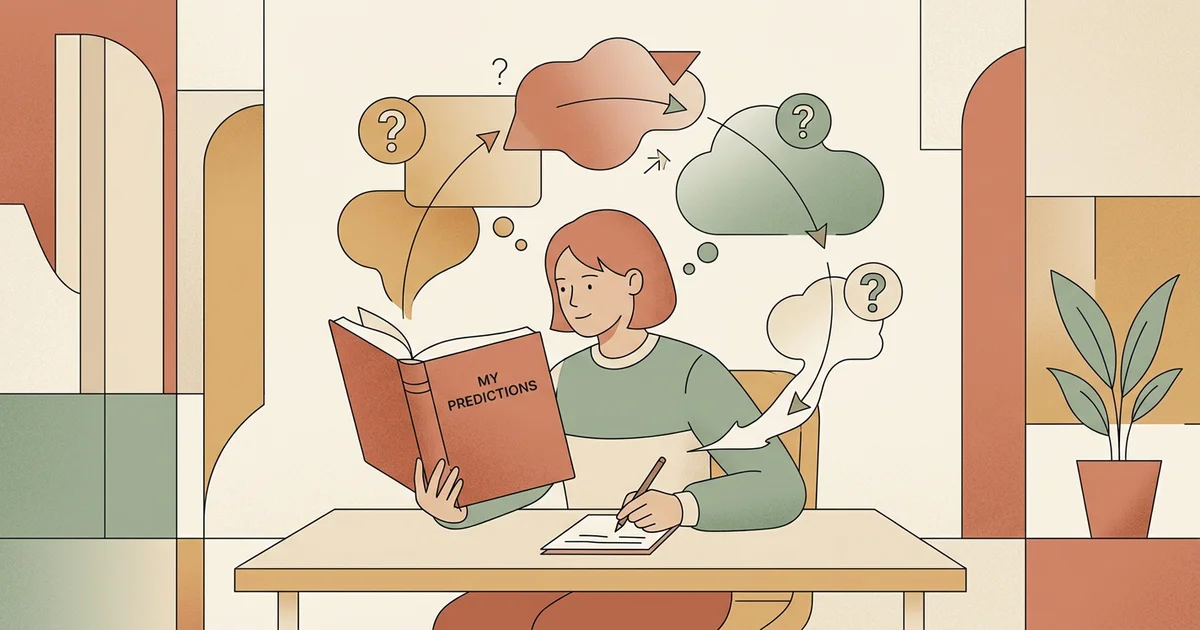
You already know that reviewing your notes helps. You probably also know that flashcards work better than passive reading. But here's the part most study guides skip: the act of trying to predict what's going to be on the test is itself one of the most powerful study techniques available.
This isn't about getting lucky with your predictions. It's about what happens in your brain when you attempt the prediction. Let's dig into the science.
What the Research Actually Shows
The testing effect, also called retrieval practice, describes a phenomenon that defies what most students believe about learning. Roediger and Karpicke showed in 2006 that students who practiced retrieving information performed significantly better on later tests than students who spent the same amount of time simply re-reading the material. The interesting finding was that this advantage grew larger over time, not smaller. A week later, the difference was dramatic.
Think about what that means. You can spend an hour staring at your notes, feeling confident. Then someone who spent that hour actively trying to recall the information will outperform you days later.
The mechanism here is retrieval. When you pull information from memory, you strengthen the memory pathway. Each successful retrieval makes the next one easier. This is why practice tests work so well, and it's why trying to predict exam questions taps into the same cognitive process.
Karpicke and Blunt examined this further in 2011. They found that students who used retrieval practice with concept maps recalled nearly 50% more information after a week compared to students who simply studied the maps repeatedly. The key finding was that retrieval forced students to engage with the material in a way passive review never could.
Why Prediction Hits Different
Here's where it gets more interesting. Not all testing is equal. Karpicke, Butler, and Roediger (2009) found that most college students did not test themselves on their own, even when given retrieval practice opportunities. The students who did test themselves, even informally, outperformed those who only restudied. Generating test questions yourself forces a deeper engagement with the material than answering someone else's questions does.
When you predict exam questions, you're doing something similar to those self-testing students. You're asking yourself: what would I want to ask someone if I were testing them on this material? This forces you to identify the core concepts, the relationships between ideas, and the details that matter enough to test.
But there's a secondary benefit. The failed predictions teach you something too. When you predict that a certain topic will appear and it doesn't, you've learned something about the structure of the material or the instructor's priorities. When you predict and you're right, the prediction itself has primed your memory for that content.
Lehman and Karpicke published research in 2016 on elaborative retrieval, showing that retrieval enhanced retention because it produced semantic mediators linking cues to target information. Their work supports the claim that generation-based study produces measurable learning benefits that persist across retention intervals.
How to Use This
Predicting exam questions isn't complicated. Here's how to make it work.
Do this before you open your textbook for a new chapter. Spend five minutes writing down everything you think might be on the test. Don't edit yourself. Write down questions you think your instructor might ask, topics you suspect are important, and concepts that feel like they connect to other things. This is your prediction draft.
After you finish reading a section, close the book and generate three questions. Write actual questions, not topics. Instead of "the Industrial Revolution," write "How did the Industrial Revolution change urban demographics?" The specificity matters. You're training yourself to retrieve at the level of detail that actual tests demand.
Compare your predictions to past exams. Look at old tests from your instructor or similar courses. Where did you predict well? Where did you miss? This isn't about being psychic. It's about calibrating your sense of what counts as important.
Use failed predictions as study signals. When you predicted something that never appeared on an old exam, ask yourself why you thought it mattered. Maybe it does matter, just wasn't tested. Or maybe you're spending too much time on details that instructors don't emphasize. Either answer helps.
End every study session with a prediction challenge. Before you stop, write down what you expect to see on the next test. This isn't superstition. It's a retrieval practice exercise that also gives you feedback about your understanding.
The Counterintuitive Part
You might feel like predicting questions is a waste of time. You could spend that five minutes actually reading the material instead. Here's the thing, though. The prediction forces retrieval, and retrieval beats re-reading every time.
Roediger and Karpicke found in their research that students consistently overestimated how well re-reading prepared them. They underestimated the power of testing. The feeling of fluency you get from reading something multiple times is misleading. You recognize the words. That doesn't mean you can recall them under pressure.
Prediction gives you the discomfort of not knowing, and that discomfort is the point. The struggle to retrieve is where the learning happens.
So What Does This Mean for Your Study Sessions
Stop saving all your studying for the night before an exam. Retrieval practice works best when you do it repeatedly, with intervals between attempts. Predictions made early in your learning, then checked against material later, give you feedback loops that passive review can't provide.
Build prediction into your routine. Not as a gimmick, but as a way to force your brain to do the hard work of recalling information instead of recognizing it.
The evidence suggests that students who incorporate prediction and retrieval practice consistently outperform students who rely on passive review. Not because they're smarter. Because they're practicing in a way that matches how memory actually works.
What's stopping you from trying this on your next study session?
Put the ideas into practice
Use Piply to organize materials and practise what you’re learning.
Try Piply