 iOS App
  Android App
 Study tips
Retrieval Practice (Active Recall): The Study Method That Outperforms Everything Else
Elizabeth Nune
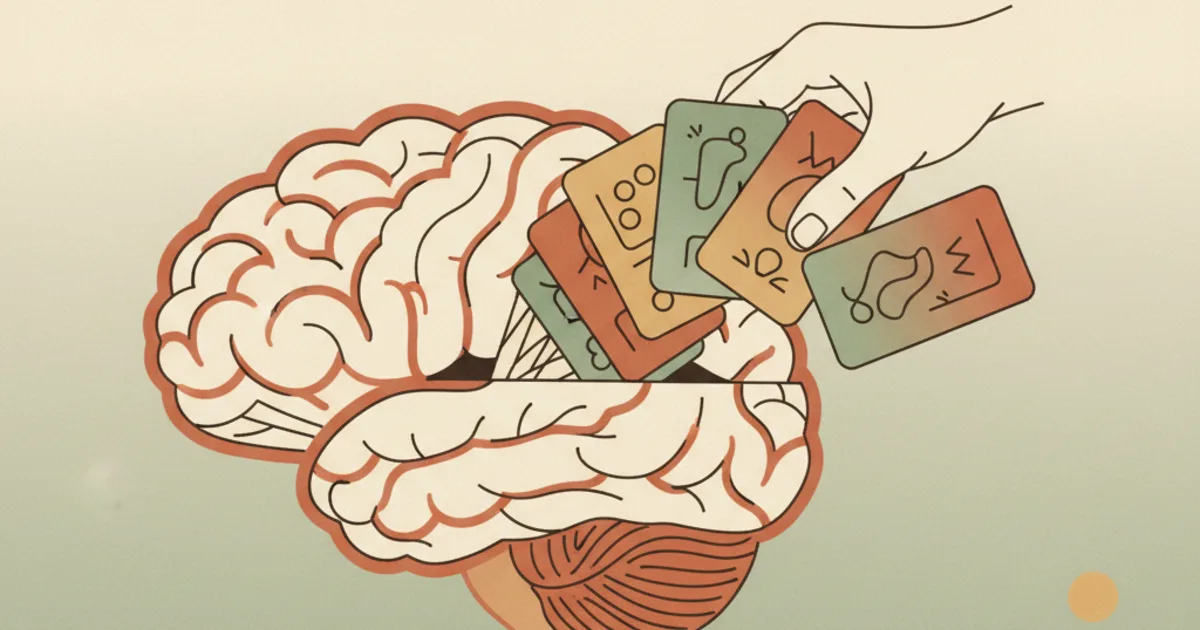
Retrieval Practice: The Most Powerful Study Method Nobody Talks About
You've probably never had a teacher say this in class: "Take out a blank sheet of paper and write down everything you remember from last week's lecture."
But that simple act, trying to recall information from memory without looking at anything, is one of the most effective study techniques ever scientifically tested.
It's called retrieval practice. And the evidence behind it's so consistent and so strong that psychologists call it one of the most robust findings in the science of learning.
What Retrieval Practice Actually Is
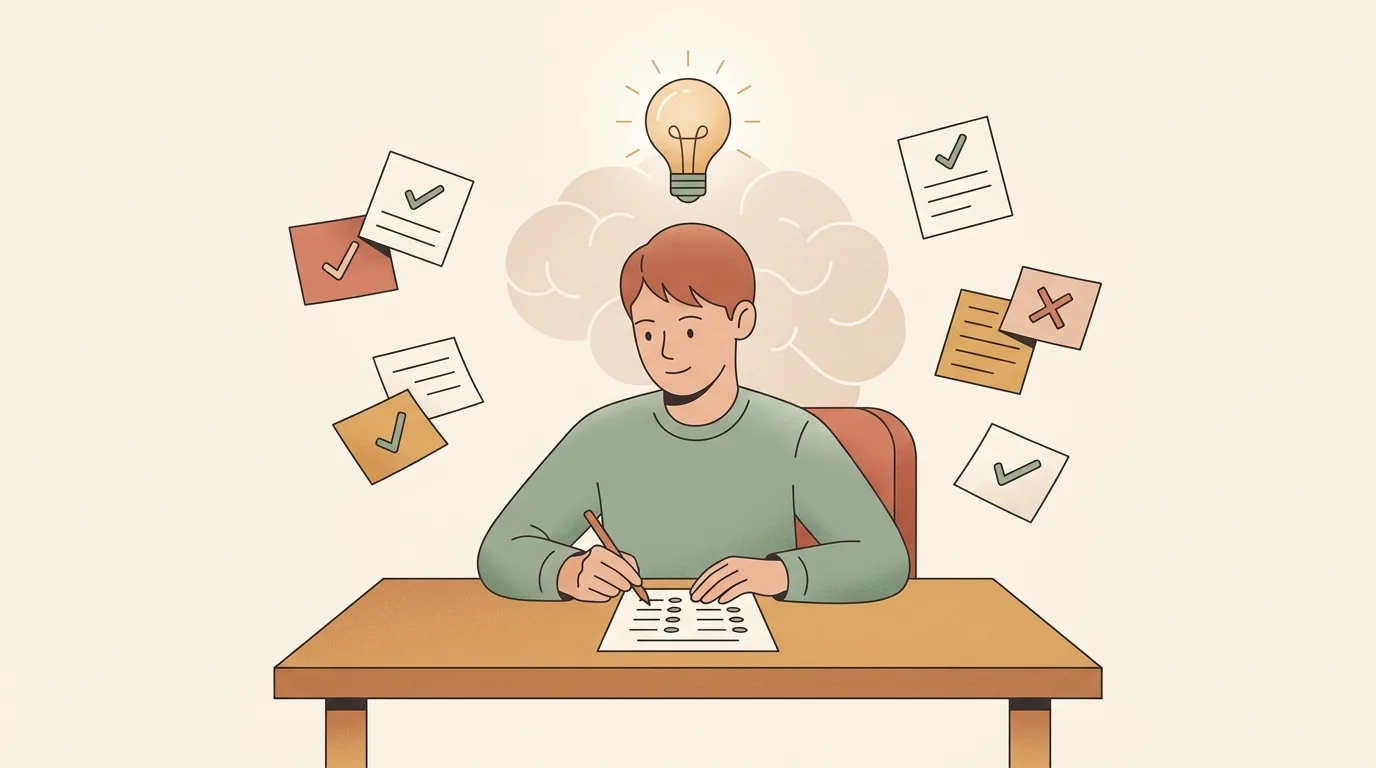
Retrieval practice is the act of trying to recall information from memory without any prompts or aids in front of you.
You close the book. You put away your notes.
You try to write or say everything you know about a topic.
That gap, the painful moment where you know you learned something but can't quite reach it, isn't a sign you should give up and look it up. That gap is the point. The struggle to retrieve is precisely what strengthens the memory.
The opposite of retrieval practice is recognition-based study. Recognition is what happens when you read through your notes and think "yes, I remember that." Recognition is easy.
It requires almost no cognitive effort. And it produces almost no lasting learning.
The exam you're studying for doesn't give you your notes in front of you. The exam asks you to retrieve. Retrieval practice trains exactly that skill.
The Science: Roediger and Karpicke
The landmark study on this is by Henry Roediger and Jeffrey Karpicke, published in 2006 and replicated in follow-up work through 2011. The setup was simple and the results were stark.
Students studied a text passage. One group then reread the passage four more times.
The other group tested themselves on the passage, trying to recall everything they could, four times. Both groups spent equal time on their respective activities.
On an immediate test, the rereading group performed better. This is the moment most students stop. They tried self-testing once, it felt harder than rereading, and they concluded that rereading must be more effective.
But Roediger and Karpicke tested both groups again one week later. The group that had practiced retrieval substantially outperformed the rereading group. In the follow-up 2011 study, the retrieval practice group remembered nearly 50 percent more material after five study sessions than the rereading group did after the same number of sessions.
The immediate feeling lied. The delayed test revealed the truth.
Why It Feels Like It Is Not Working
Here is the problem that keeps students from using retrieval practice consistently.
Retrieval practice feels like you're failing. You try to recall something and nothing comes. You try again and get part of it.
You feel worse than if you had just reread the chapter and felt the familiar fluency of recognition.
That struggle doesn't mean the technique failed. It's your brain doing the work learning requires.
Psychologists call the phenomenon desirable difficulty. The conditions that make learning feel hard, struggling to retrieve, making mistakes, having to think hard, are the same conditions that produce durable, long-term memory. The ease of rereading feels like progress. It isn't.
Glenn Glover (1989) demonstrated this directly. Students who were given immediate feedback on retrieval practice sessions showed better long-term retention than students who practiced retrieval without feedback, but crucially, both retrieval groups outperformed the rereading group, even though the retrieval groups reported feeling like they learned less.
The subjective experience of learning and the actual effectiveness of learning are often inversely related. The harder it feels, the more likely you're to remember it later.
What Retrieval Practice Looks Like in Practice
There's a spectrum from informal to formal retrieval practice, and all of it works.
Low friction: Close the book after reading a section and write down everything you can remember. No prompts, no hints, no peeking. Then open the book and check what you got right. The gap between what you knew and what you actually knew is your learning map.
Flashcards: Write a question on one side and the answer on the other. Try to answer before flipping. The act of generating the answer, even when you get it wrong, is more effective than passively reading a fact.
The explain-it-outloud method: After reading a section, close everything and explain the concept as if you're teaching it to someone who has never seen the material. This is retrieval practice disguised as speaking. You can't fake this one. If you can't explain it simply, you don't understand it yet.
Practice tests: If past exams or quiz banks exist for your course, use them. Not as a way to measure your knowledge but as a training tool. The act of retrieving under anything close to test conditions is itself practice for retrieving under test conditions.
The common thread is simple: no prompts, no looking, no recognition support. Retrieval only counts when you're actually retrieving.
Why Spaced Retrieval Matters More Than Massed Practice
Once you accept that retrieval practice works, the next question is when to do it.
The spacing effect, also documented by Ebbinghaus in the 1880s and repeatedly confirmed since, shows that distributing retrieval practice over time produces better retention than massing all practice into one session.
This is why cramming the night before an exam produces feeling of familiarity but poor durability. You practiced retrieval, but you practiced it all at once. The material fades rapidly after the exam because the spacing interval was compressed.
Spaced retrieval practice, returning to the same material over increasing intervals, is essentially how spaced repetition works. Each successful retrieval extends the interval before the next review. Each review at the edge of forgetting, not too soon, not too late, is more effective than a review when the memory is still fresh.
The students who score highest on cumulative final exams aren't the ones who studied the most the week before the exam. They're the ones who practiced retrieval on the material at intervals throughout the semester.
The Mistake Students Make with Flashcards
Flashcards are one of the most accessible forms of retrieval practice, but students often use them wrong.
The most common mistake: reading the question, thinking you know the answer, and flipping before you've actually tried to retrieve it. Your brain registers "I recognize this" as "I know this." The card passes, but nothing was retrieved.
The fix is the same rule every time: see the question, close your eyes, try to answer, then flip. Even when you're sure you know it. Especially when you're sure you know it. That moment of guaranteed retrieval is when the memory strengthens the most.
The second mistake: never creating cards from your own notes and lectures. Cards from pre-made decks are fine for some content, but the act of creating a flashcard, deciding what the question is, deciding what the answer is, choosing which details matter, is itself a form of retrieval practice. Making the card forces you to process the material at a deeper level than passive reading.
The One Question to Ask Yourself Before Every Study Session
Before you open your notes, before you start reading, before you pull up your flashcards app, stop and ask this:
What would I say right now if someone asked me to explain the main point of what I studied last time?
Don't check your notes. Don't skim. Just try to answer it. Write it down or say it out loud.
That 60 seconds of retrieval before you start is a warm-up. It activates the relevant pathways, identifies what you actually know versus what just looked familiar, and primes your brain for the incoming new material.
If you can't answer that question, you aren't ready to move on. You're building on a foundation you've not verified exists.
Making Retrieval Practice Automatic
The reason most students default to rereading is that rereading is easy and retrieval practice is hard. Willpower is finite, and on a long study session, the brain picks the path of least resistance every time.
The solution is to design your environment so retrieval is the default, not the exception.
Piply is built around this. Rather than opening your notes and reading, you open a study session and Piply generates flashcards from your documents. The session presents you with questions and a blank space. You retrieve. The system handles scheduling the next review. The effort is structured in without being a separate task.
The flashcard appears.
You try to answer. You reveal the card.
The system schedules your next review at the optimal interval. Retrieval practice becomes the default mode of studying, not something you have to remember to do.
This matters because the alternative, relying on yourself to choose retrieval over rereading, fails predictably. The environment wins. Design the environment so retrieval is what happens automatically.
Retrieval practice is the single most evidence-based study technique available. It requires no tools, no apps, and no special preparation. It only requires that you close the book before you're ready to look at it. Try it for one chapter and see the difference for yourself. Start at app.piply.ai
Put the ideas into practice
Use Piply to organize materials and practise what you’re learning.
Try Piply