 iOS App
  Android App
 Study tips
Interleaving vs Blocked Practice: Which Study Method Actually Works Better
Piply Team
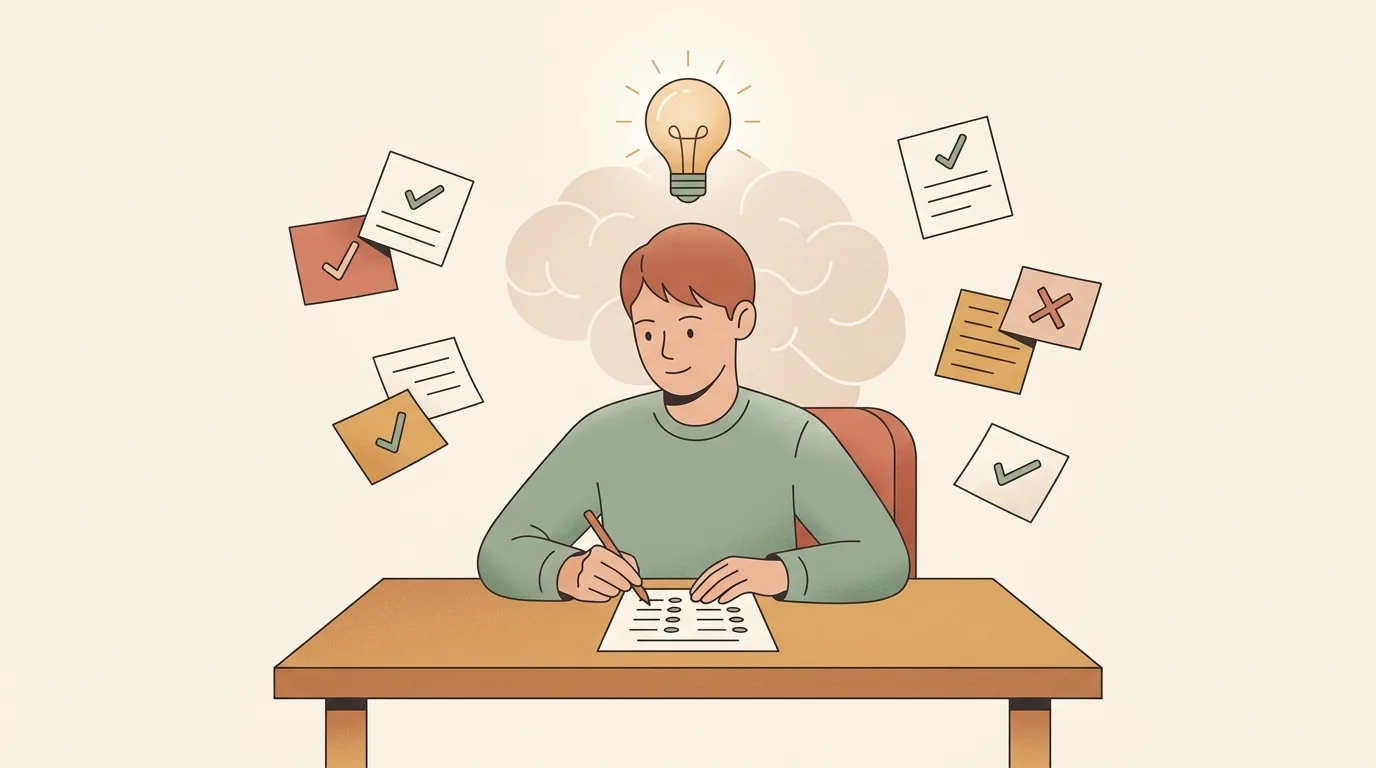
Most students study the same type of problem over and over until they feel confident. Then they move on. It feels productive. Research suggests it might be the wrong approach entirely.
Why Blocked Practice Feels So Good
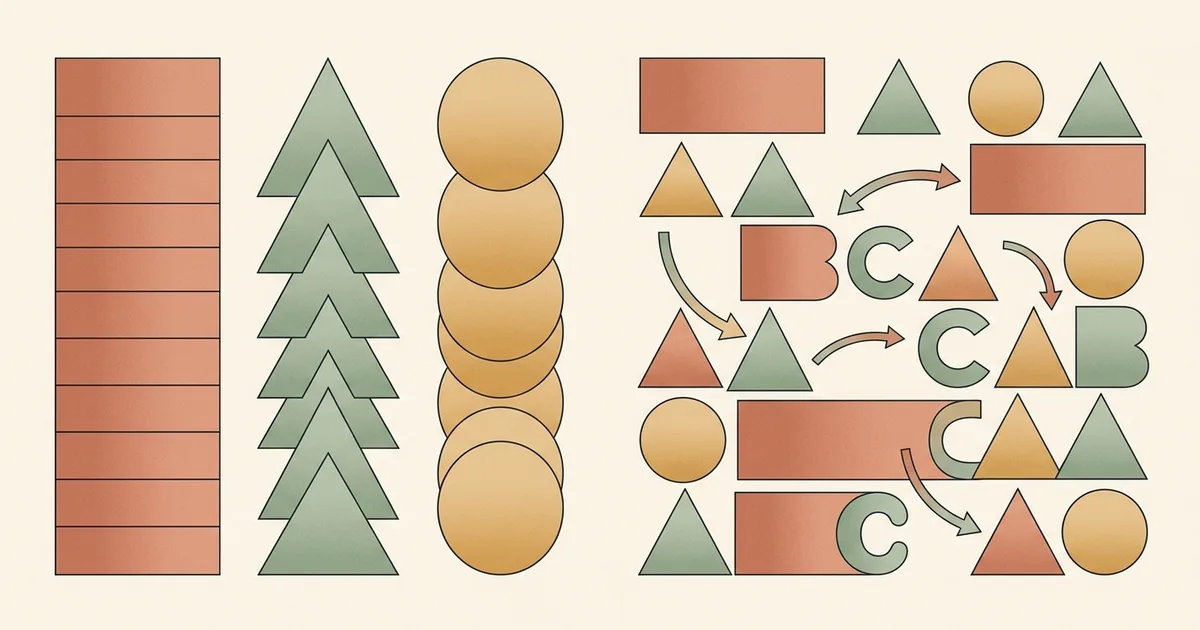
Blocked practice is what it sounds like. You work on one type of problem, one skill, one topic, in a solid block. You do your math problem set, all quadratic equations, back to back. You finish and think, I get this.
The feeling is real but misleading. What you're feeling is fluency with that one type of problem, right now. Your brain has settled into a pattern. It knows exactly what to do. The moment you switch to something else, that warm glow fades fast.
Psychologists call this the illusion of competence. Koriat, Bjork, and colleagues documented this kind of miscalibration in study monitoring. Students routinely overestimate how well they've learned something after blocked practice. Put them in an exam where problems are mixed in with other types, and performance drops noticeably.
What Interleaving Actually Does
Interleaving means mixing different types of problems, topics, or skills within a single study session. Instead of twenty quadratic equations in a row, you do five quadratics, five geometry problems, five probability questions, and repeat.
At first it feels harder. You keep having to pause and figure out which approach to use. That friction is the point.
The research here is surprisingly robust. Rohrer, Dedrick, and Stershic (2015) ran a study with middle school math students. One group used blocked practice. The other used interleaved practice covering the same problems. On a delayed test four days later, the interleaving group scored 72% compared to 38% for the blocked group. That's not a small effect.
Taylor and Rohrer (2010) found similar results with probability problems. Interleaving helped even when the total study time was identical.
Why It Works
The mechanism matters. When you study one type of problem in a block, your brain engages something close to automaticity. It recognizes the pattern and runs the same procedure every time. That feels like mastery. It isn't, because in the real world problems don't arrive pre-sorted.
Interleaving forces your brain to make a decision each time. Which approach applies here? That act of selecting a strategy is itself practice. You're building the skill of recognizing problem types and choosing accordingly, not just executing one procedure.
It also creates stronger retrieval pathways. When you come back to a problem type after working on others, the retrieval attempt is harder. Harder retrieval leads to better long-term retention. This connects directly to the testing effect. The struggle is the feature, not a bug.
There's a third element worth mentioning. When you interleave, you start noticing similarities and differences between problem types more clearly. You learn the boundaries of each approach by contrast. That discrimination ability shows up in exams as better performance on novel problem variations.
The Practical Reality
Most textbooks are organized by topic. Exercises at the end of a chapter are blocked by design. If you follow the textbook straight through, you're doing blocked practice by default.
To interleave, you have to deliberately mix things up. One approach is to take problems from different chapters and solve them in rotation. Another is to study a topic, switch to an unrelated one when you get stuck or bored, and come back later.
Some subjects are easier to interleave than others. Math is probably the clearest case. But language learning can mix vocabulary from different themes. History can alternate between cause-and-effect analysis and primary source interpretation. Even flashcards can be shuffled across topics rather than studied topic by topic.
The key constraint is that interleaving only helps when you're actually trying to learn, not just getting familiar. If you're doing problems you already know well, interleaving won't add much. It's most valuable in the learning phase, when you're still building the connections.
What This Means for Your Study Sessions
Blocked practice isn't useless. It has a role, particularly when you're first encountering a new type of problem and need to build basic familiarity. But stopping there leaves performance gains on the table.
The evidence suggests a two-phase approach works better. Start with a short blocked session to build initial familiarity with a problem type. Then switch to interleaved practice across multiple types. Or go straight to interleaving if you're past the very basics.
The hard part is that interleaving feels slower in the moment. Students consistently rate interleaved practice as harder and less effective, even when the opposite is true. This is the same illusion that makes cramming feel productive. Your feelings in the moment are not a reliable guide to what actually works.
So when you sit down to study, and the mixed problem set feels frustrating, that frustration is a signal. It means your brain is working in a way that builds durable knowledge, not just temporary familiarity.
Don't trust the feeling. Trust the evidence.
Put the ideas into practice
Use Piply to organize materials and practise what you’re learning.
Try Piply