 iOS App
  Android App
 Sleep Deprivation and Study: How Each Hour of Lost Sleep Damages Your Memory
Piply Team
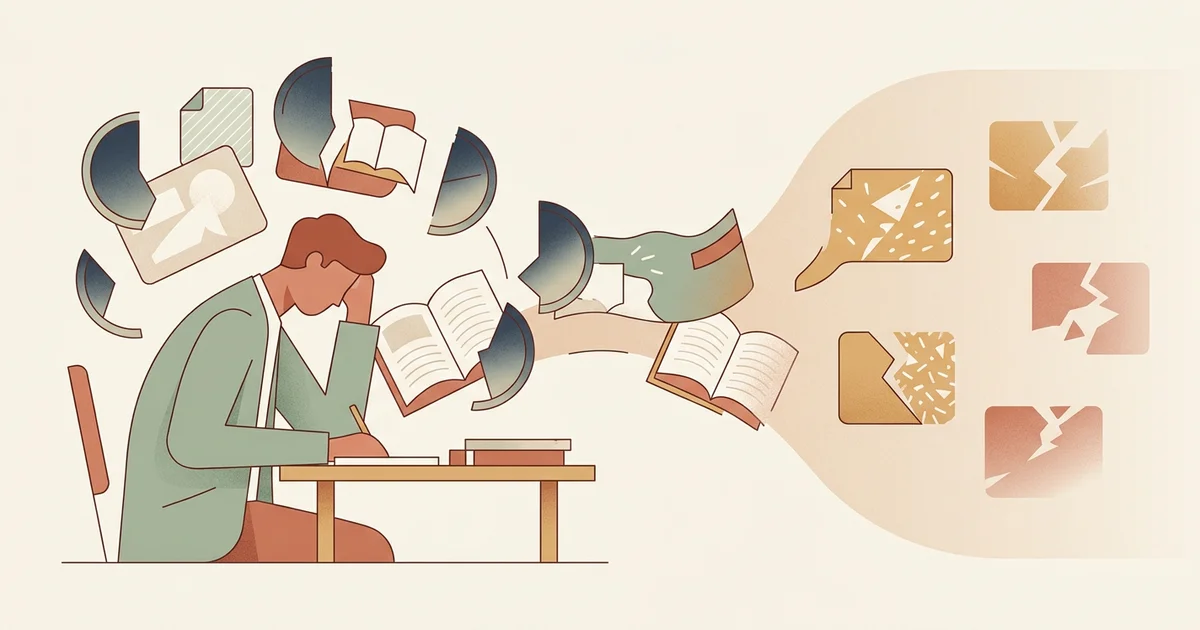
Most students know they're not sleeping enough. What they don't know is exactly what each missed hour costs their brain.
The research is clearer than ever on this. Sleep isn't a break from learning. It's the stage where your brain files, strengthens, and connects what you studied that day. Miss it, and you're essentially trying to pour new information into a cup that hasn't been emptied. The data backs this up hard.
One night of sleeping four hours instead of eight drops your ability to retain new information by as much as 40 percent. That's not a guess. Walker and colleagues (2007, Current Biology) found this using word-pair tests with sleep-deprived participants. They compared people who got a full night to those running on fumes. The deprived group learned new material at a rate that was effectively broken. They weren't just slower. They were fundamentally less capable of absorbing anything new.
The mechanism behind this is both simple and kind of disturbing.
When you're awake, your brain is busy building new synaptic connections. It's absorbing. Taking in. This happens especially during focused study, which is why cramming can feel like you're learning so much. But that feeling is a trap. Those connections need something to happen to them while you sleep, or they fade. During slow-wave sleep, your brain replays the day's neural activity and transfers memories from the hippocampus to the cortex for long-term storage. Sleep researcher Matthew Walker calls this "a filing system that moves memories from short-term to long-term storage." Without it, you wake up with a hippocampus full of yesterday's notes and no room to take in new ones.
This is why pulling an all-nighter before an exam is so self-defeating. You're not gaining study time. You're burning the next day's learning capacity.
The damage isn't linear, either.
There's a threshold effect. Research from Rauchs and colleagues (2011, Sleep) shows that losing even one hour of sleep disrupts memory consolidation during the next sleep cycle. But the real cliff comes when you drop below six hours. Below that mark, studies consistently show that attention, working memory, and encoding all take a sharp hit. You don't feel the full effect because your brain stops accurately judging how impaired it is. The illusion of functioning on five hours is one of the most dangerous things about sleep deprivation. You think you're doing fine. The numbers say otherwise.
Diekelmann and Born (2010, Nature Neuroscience) found something that changes how you should think about napping. They showed that sleep, even brief daytime sleep, reactivates newly learned memories and strengthens them. Short naps of around 20 to 60 minutes allow your brain to process what you studied without falling into deep sleep, which can cause grogginess. Students who napped after learning retained more than students who stayed awake and reviewed. The nap was more effective than a second study session. Let that sit for a second. A nap beat out more studying.
This is the part most people resist because it feels lazy.
They think they're wasting time they could be going over notes. But the evidence says the opposite. Sleep is when your brain does the actual work of turning what you studied into knowledge you can access. Sitting at your desk for an extra two hours without sleep doesn't just offer diminishing returns. It actively works against you. You're reviewing while your brain has already started losing what you learned earlier.
How to Use This
Here are a few things you can actually do this week.
Audit your sleep before you audit your notes. Figure out how many hours you're actually getting, not how many you think you're getting. Track it for three days. If you're under six, that's the first problem to solve, not your study schedule.
Sleep after studying, not before. The memory transfer happens during sleep following learning. This means the timing matters. If you can, do your most difficult studying early in the evening, then sleep. If you study late at night, the consolidation window gets compressed and the quality of that sleep matters even more.
Use 20-minute naps strategically. After a heavy study session, a short nap can boost retention. Set an alarm. Anything longer than 30 minutes risks sleep inertia, the fog that hits when you wake from deep sleep. A brief nap sharpens you back up. A long nap might leave you worse off than before.
Stop glorifying the all-nighter as dedication. It's a last resort, not a strategy. If you have to pull one, accept that the material you cover during those hours won't stick well. Plan to re-engage with it after a full night's sleep. The all-nighter gets it on paper. Sleep makes it yours.
What does your current sleep schedule actually look like, and are you willing to treat it as part of your study practice rather than something separate from it?
Put the ideas into practice
Use Piply to organize materials and practise what you’re learning.
Try Piply