 iOS App
  Android App
 Study tips
The Piply Method , A Complete System for the Self-Directed Learner
Elizabeth Nune
The Piply Method, A Complete System for the Self-Directed Learner
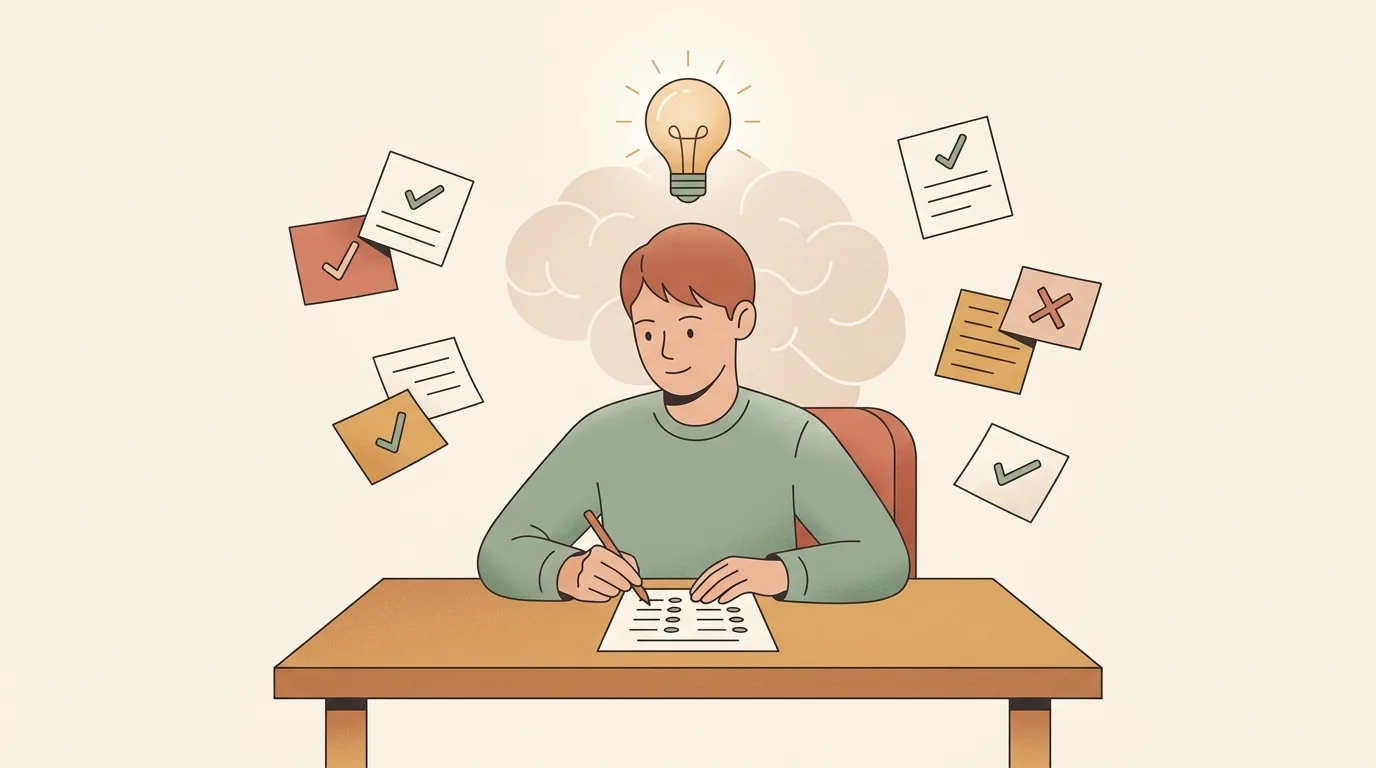
You already know you should use spaced repetition. You've heard that active recall beats re-reading. You've maybe even tried Anki once or twice before abandoning it because the setup took longer than the study session itself.
The problem isn't knowledge. The problem is system.
Most self-directed learners, master's students buried in reading lists, PhD candidates managing hundreds of citations, summer-break students with nothing but time and good intentions, aren't short on information. They're short on infrastructure. They know what works. They just can't make it happen consistently without a team of helpers or a rigid program forcing their hand.
That gap is exactly what the Piply Method was built to close.
What the Piply Method Is
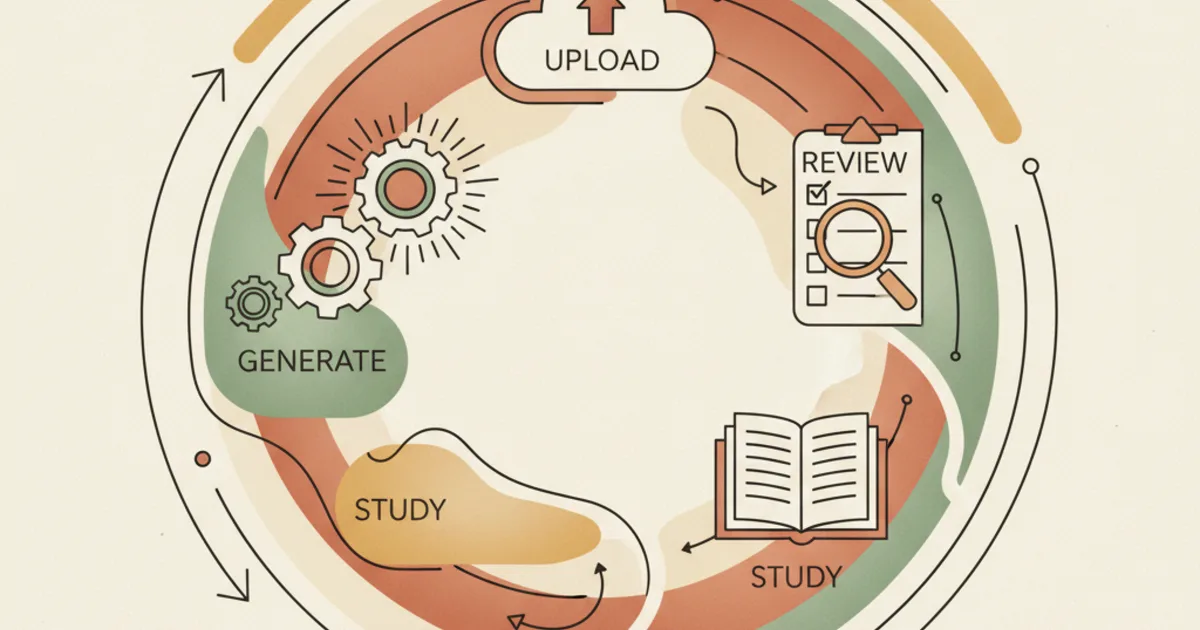
Piply is the operating system for turning a student's reading into durable knowledge. The method is a four-part workflow:
- Capture, get your material into one place
- Extract, turn raw content into study-ready flashcards, automatically
- Schedule, apply spaced repetition without doing the math yourself
- Review, show up to timed sessions and let the system handle the rest
If that sounds simple, it's supposed to. The method works because it removes decisions, not because it adds complexity.
Why the Piply Method Works: The Science Behind Each Step
Capture: Reduce the Activation Energy
Every tool you open before you start studying is a small barrier to entry. ResearchGate, your LMS, a PDF you downloaded three weeks ago, a Notion page, the average graduate student touches four or five separate systems just to find the material they need to review today.
The activation energy required to start is the single biggest predictor of whether you actually will start. When the material is already in your workspace, uploaded, parsed, ready, the barrier disappears.
Extract: The PDF-to-Flashcard Pipeline
Once your material is in, the method uses AI to generate flashcards directly from your own notes and PDFs. No manual card creation. No copying and pasting into a separate app.
This matters for a specific reason.
Dunlosky et al. (2013) ranked learning techniques by their evidence base.
Practice testing and distributed practice ranked highest. Flashcard use is a form of practice testing, retrieval practice, and it carries one of the highest effect sizes of any study intervention (Roediger & Karpicke, 2011). Students who practice retrieving information remember it substantially better than students who re-read it.
The bottleneck has always been the manual labor of creating flashcards. Piply removes that bottleneck. The material you've already read becomes flashcards without any additional effort beyond clicking a button.
Schedule: Spaced Repetition Without the Spreadsheet
Spaced repetition is the most evidence-backed study technique that most students don't use consistently. Ebbinghaus documented the forgetting curve in 1885. Every replication since, including Bjork's work on desirable difficulty, has confirmed the same pattern: revisiting material at increasing intervals produces dramatically better long-term retention than massed practice.
Managing a spaced repetition schedule by hand becomes a second job. You have to decide when to review each card, track what you got right, and adjust intervals accordingly. Most students either skip it entirely or use it inconsistently.
The Piply Method automates the scheduling.
You read. Piply decides when you need to see each card again.
You just show up.
Review: Sessions, Timers, and Streaks
The final component is behavioral. Even with perfect flashcards and a perfect schedule, a study system fails if you don't actually open it.
Study Sessions in Piply provide a few things that individual willpower can't reliably provide: a defined start time, a timer that runs without you having to watch the clock, and a streak system that makes consecutive days feel rewarding. Research on implementation intentions (Gollwitzer, 1999) shows that pre-specifying when and where you'll study dramatically increases the likelihood you'll follow through. Piply's scheduled sessions function as a built-in implementation intention. The session is already on your calendar. You just have to sit down.
Who This Is For
The Piply Method is specifically designed for two types of students who share the same core problem.
The first is master's students. You're juggling coursework, research, and often a job or teaching responsibilities.
You don't have a structured program holding you accountable. You're largely self-directed, which is liberating until it means that nothing is holding the system together except you.
The second is summer-break students. You have maximum freedom and minimum external structure. This is both the greatest advantage and the greatest risk.
You could get months ahead. Most students instead experience what researchers call summer learning loss, a measurable decline in knowledge retention over unstructured breaks (Cooper et al., 1996).
Both groups need the same thing: a system that substitutes for external accountability. No study buddy to coordinate with. No strict program with mandatory deadlines. Something that runs quietly in the background and makes the right behavior the path of least resistance.
The Core Principle: Remove Friction, Not Add Features
Every component of the Piply Method is there because it removes a specific friction point that stops self-directed learners from doing what they already know they should be doing.
The friction is cognitive load.
Every decision you have to make, which app to use, when to review, how to format a flashcard, whether you've done enough, consumes a finite resource. The research on ego depletion (Baumeister et al., 1998) and its subsequent replications suggest that decision fatigue is real and it degrades the quality of your subsequent choices.
A good system for self-directed learners doesn't ask you to make more decisions. It makes the decisions for you.
How Piply Runs the Piply Method
Here's what using the Piply Method inside Piply actually looks like in practice.
You upload a PDF of your lecture notes or a chapter from your course reading.
The system parses it and generates a set of flashcards, multiple choice, fill in the blank, and free recall, based on the content. You review them immediately inside a timed Study Session.
The session ends and Piply automatically schedules your next review based on how well you performed, using a spaced repetition algorithm.
You come back two days later. Three days after that.
A week later. Each session is fifteen or twenty minutes. The system tracks your streak. You don't have to think about when to review or what to review. The system handles the scheduling and the prompting.
Over time, what you've read stops feeling like something you vaguely encountered and starts feeling like something you actually know.
The Difference Between a Method and a To-Do List
Most study advice is a to-do list. Use flashcards. Review regularly. Do practice tests. These are instructions. They don't tell you how to make any of it happen consistently when you've six other demands on your time and energy.
The Piply Method is different.
It's a system that makes the right behavior automatic. You don't have to remember to review.
You don't have to calculate intervals. You don't have to decide which card goes where. The system runs the logistics so your brain can focus on the learning.
That's what masters students and summer-break students actually need. Not another study tip.
Not another app recommendation. A system that works even when you're tired, even when you're busy, even when motivation is low.
The method exists because the techniques were never the problem. The infrastructure was.
Try the Piply Method inside Piply, upload your first document and let the system take over the rest. app.piply.ai
Put the ideas into practice
Use Piply to organize materials and practise what you’re learning.
Try Piply