Piply Logo
Piply
study-tips

Effortful Retrieval: Why Struggling to Remember Makes You Remember Longer

Effortful Retrieval: Why Struggling to Remember Makes You Remember Longer

Effortful Retrieval: Why Struggling to Remember Makes You Remember Longer

You've probably done it. You're flipping through your notes for the tenth time, reading the same paragraph over and over, thinking this time it'll stick. Spoiler: it won't. Not the way you want it to.

Here's something counterintuitive. The moments when your brain works hardest to pull something out of memory are exactly the moments when that memory gets stronger. Not when it slides back in easily. Not when you just re-read it. When you fight for it.

That's effortful retrieval, and it's one of the most well-supported findings in cognitive psychology.

The Testing Effect, Explained

In the late 1970s, a researcher named Elizabeth Loftus ran a series of experiments on what she called the "testing effect." Her findings, published in the Journal of Verbal Learning and Verbal Behavior, showed that people who answered questions about a text remembered more than people who simply re-read it. The act of retrieving information, even when retrieval was incomplete, created a durable trace in memory.

Later work from Henry Roediger and Jeffrey Karpicke at Washington University built on this dramatically. In a 2007 study published in Psychological Science, they had students study word pairs either by repeated study or by repeated testing. Students who practiced retrieval tested dramatically better after a two-day delay. Not by a little. By a lot. The testing group remembered roughly 50% more than the study-only group.

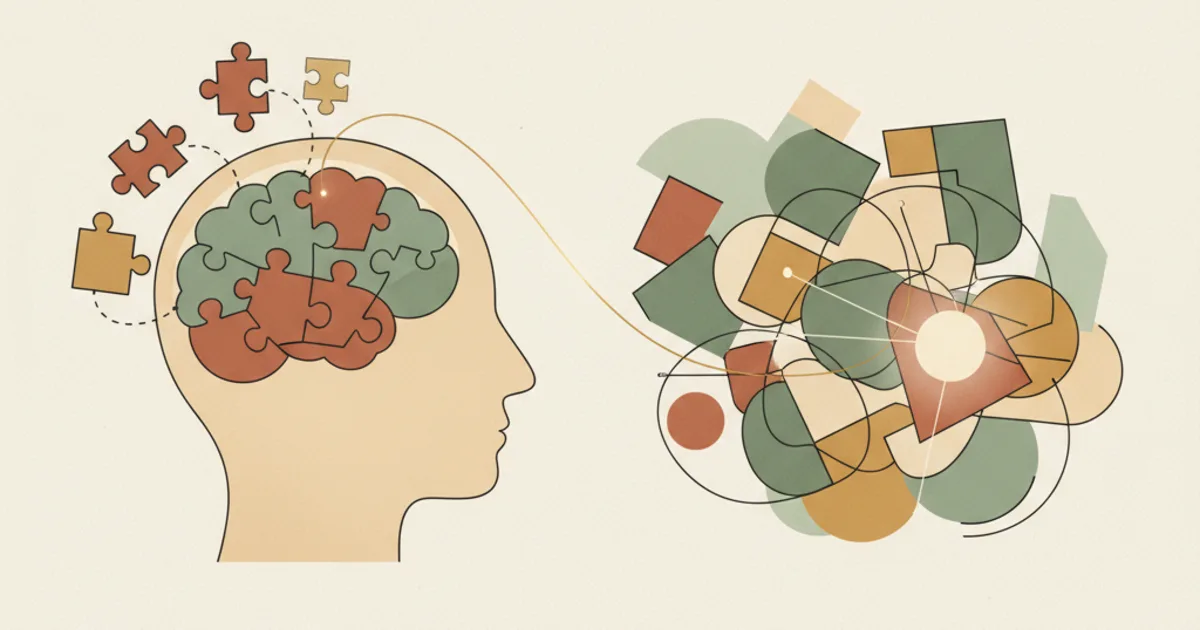
The mechanism here matters. When you struggle to retrieve something and then see the correct answer, your brain doesn't just store the new information. It tags it with a note: this was hard to get to, so this is important. Your brain is essentially betting that the difficulty of retrieval signals the information's value. It's a prediction error. The gap between what you expected to find and what you actually found gets encoded alongside the memory itself.

This is why simply highlighting or rereading creates an illusion of fluency. The material feels familiar because you've seen it before, but familiarity is not the same as accessibility. You can read something six times and still draw a blank on it two days later. That's not a memory problem. That's a strategy problem.

Why the Struggle Is the Point

There's a concept in cognitive science called "desirable difficulty." Robert Bjork coined this term in the early 1990s, and the research around it has only grown since. The idea is that learning conditions that slow you down and require more mental effort almost always produce better long-term retention, even though they make learning feel harder in the moment.

This feels bad. I want to be clear about that. Desirable difficulties are genuinely uncomfortable. The temptation is always to switch to an easier strategy, and most people do. They flip back to the notes. They look up the answer prematurely. They take the path of least resistance because it feels more productive.

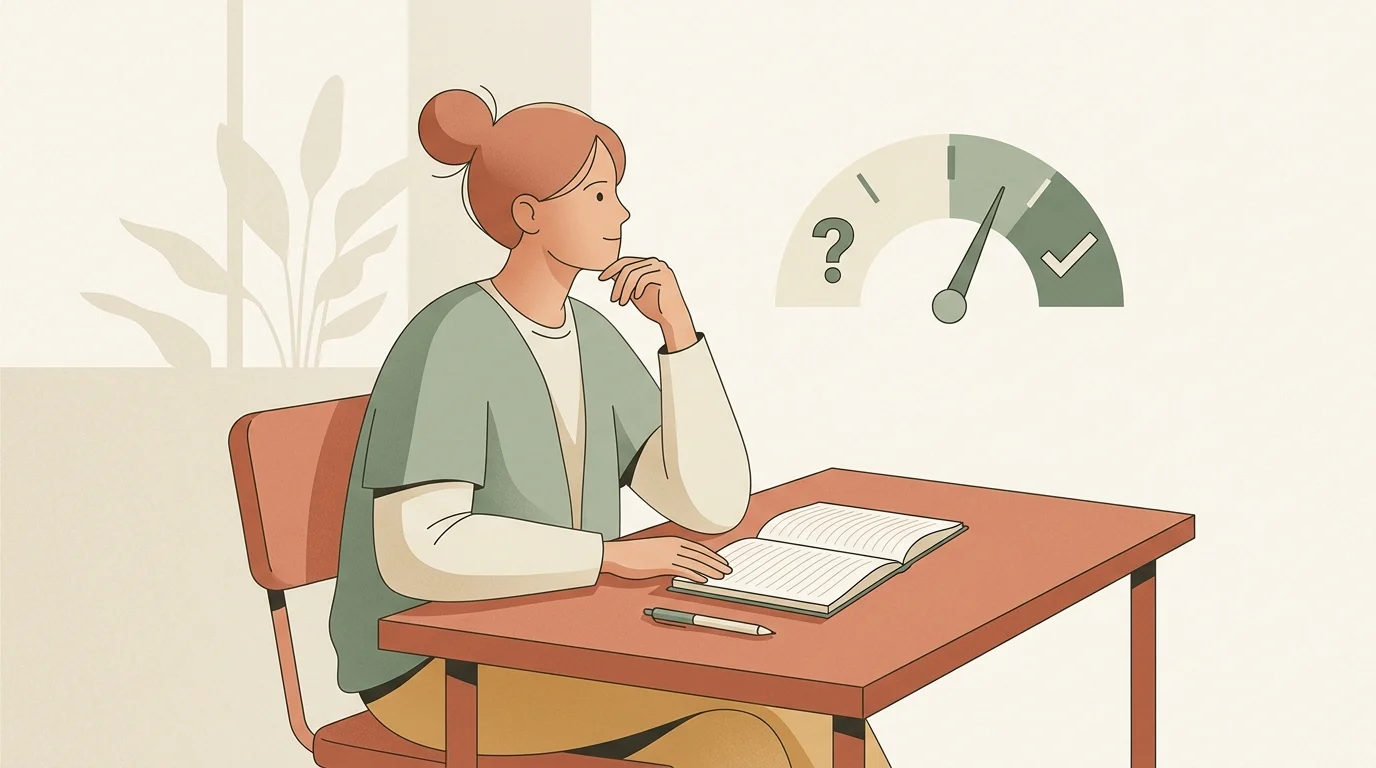
But your metacognitive sense of how well you're learning is deeply unreliable during this process. Research by Koriat and Bjork, published in Memory & Cognition in 2005, showed that people are terrible at predicting what they'll remember later. They consistently overestimate how well re-reading will serve them and underestimate how well retrieval practice will serve them. You're not a good judge of your own learning while you're doing it. You have to trust the process even when it feels like it's not working.

This is the real barrier. Not understanding the science, but tolerating the discomfort of operating in the uncertainty.

The Spacing Problem (and Why Cramming Lies to You)

One more piece. Retrieval works even better when you space it out. Cepeda and colleagues published a comprehensive review in Psychological Science in the Public Interest in 2006, analyzing 317 experiments on spacing effects. Their conclusion was blunt: distributed practice consistently outperforms massed practice for long-term retention, across every domain they examined.

Cramming feels effective because it works long enough to get you through an exam. But the information hasn't been stored durably. It's been poured into short-term memory and poured back out, with almost nothing left behind. The test performance is real, but the learning is not.

Spaced retrieval forces your brain to rebuild the memory from partial cues each time. Each rebuild strengthens the pathways. It's like pressing a crease into paper. The first crease is shallow. The second one, from a different angle, makes it permanent.

How to Use This

You can start using retrieval today, and you don't need any special tools.

Before you open your notes, close them. Read the chapter or lecture once. Then close the book and write down everything you can remember on a blank page. Everything. Including the things that feel vague or wrong. This is the productive struggle. When you hit a wall, stay there for a moment before checking the answer. The brief resistance is the mechanism doing its work.

Use flashcards with blank faces. Write the question or cue on one side. The answer goes on the back. But don't flip it immediately. Try to answer it first. If you get it right, great. If you don't, that's fine too. The attempt is what counts. Studies on the "testing effect" show that even failed retrieval attempts, followed by correct feedback, outperform no testing at all.

Restudy one section, then skip ahead. Here's a practical schedule: work through material once. Close the book and write or speak everything you remember. Open the book and check. Then move to the next section. Come back to the first section after studying two or three others. This creates spacing without any extra planning. You're naturally revisiting because you're naturally moving forward.

Talk to yourself, literally. Retrieving information aloud forces you to generate the material rather than recognize it. Recognition is easy. Generation is hard. Generation sticks. Describe what you learned today to an empty room, or to someone who wasn't there. If you can't explain it without the source in front of you, you don't own it yet.

Stop reading passively. This is the hardest one. If you're rereading and nothing is going in, it's not that you're not studying hard enough. It's that you're using the wrong mode. Replace one of your passive study sessions per day with a retrieval session. Close the book. Write. Draw a diagram from memory. Fill in a skeleton outline without looking at the original.

What You're Actually Training

All of this amounts to a shift in what you're doing when you sit down to study. Most people are trying to move information from a page into their head. Retrieval does the opposite. It trains you to pull information out. And that pull is what builds the muscle.

You don't study because information is on a page. You study so that information is available when you need it, when the book isn't there, when the context has changed, when the pressure is on. Those are the moments retrieval practice simulates. And those are the moments that matter.

Why do you think most of the study techniques you learned in school feel easy but don't last?

Ready to try Piply?

Turn this article into your reality. Start studying faster today.

Try Piply for Free