 iOS App
  Android App
 Study tips
Generational Study Habits: What Research Says About How Each Age Group Retains Knowledge
Piply Team
You probably have a hunch about who learns faster. Younger people, maybe. Faster brains. More plasticity. That story is everywhere.
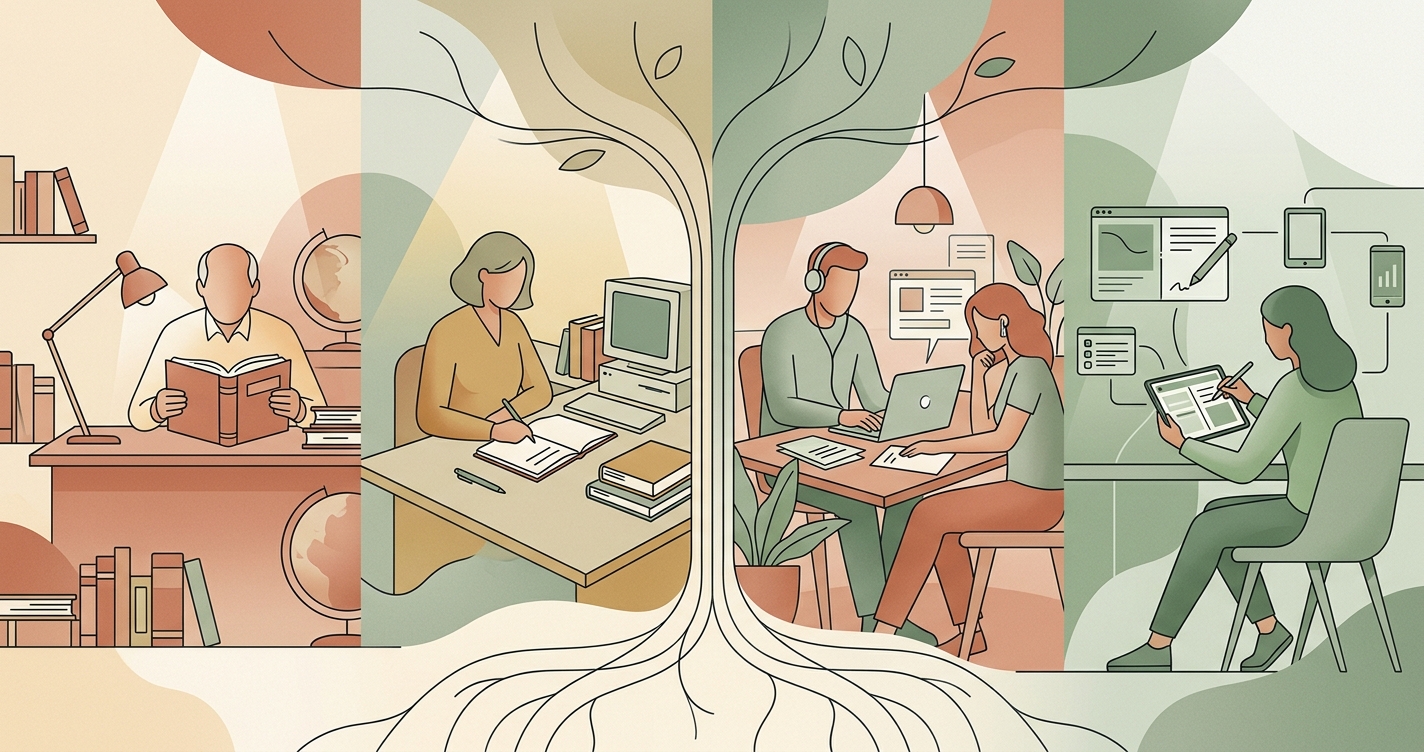
But here's what the research actually shows: age doesn't determine how well you learn. It determines what you learn and how your brain processes information. The strategies that work best shift across the lifespan, and misunderstanding that costs people years of frustrated, ineffective study.
This isn't about young versus old. It's about three distinct cognitive phases, each with its own rules.
The Young Brain: Why Gen Z Students Actually Struggle
There's a persistent myth that young people are natural learners. Their brains are literally still developing. That should mean something, right?
Here's what that actually means: the prefrontal cortex, the region responsible for executive function, self-regulation, and sustained attention, doesn't fully mature until the mid-twenties. So while younger learners often have strong working memory and can absorb new information quickly, they frequently struggle with planning study sessions, resisting distractions, and knowing when they actually understand something versus when they're just familiar with it.
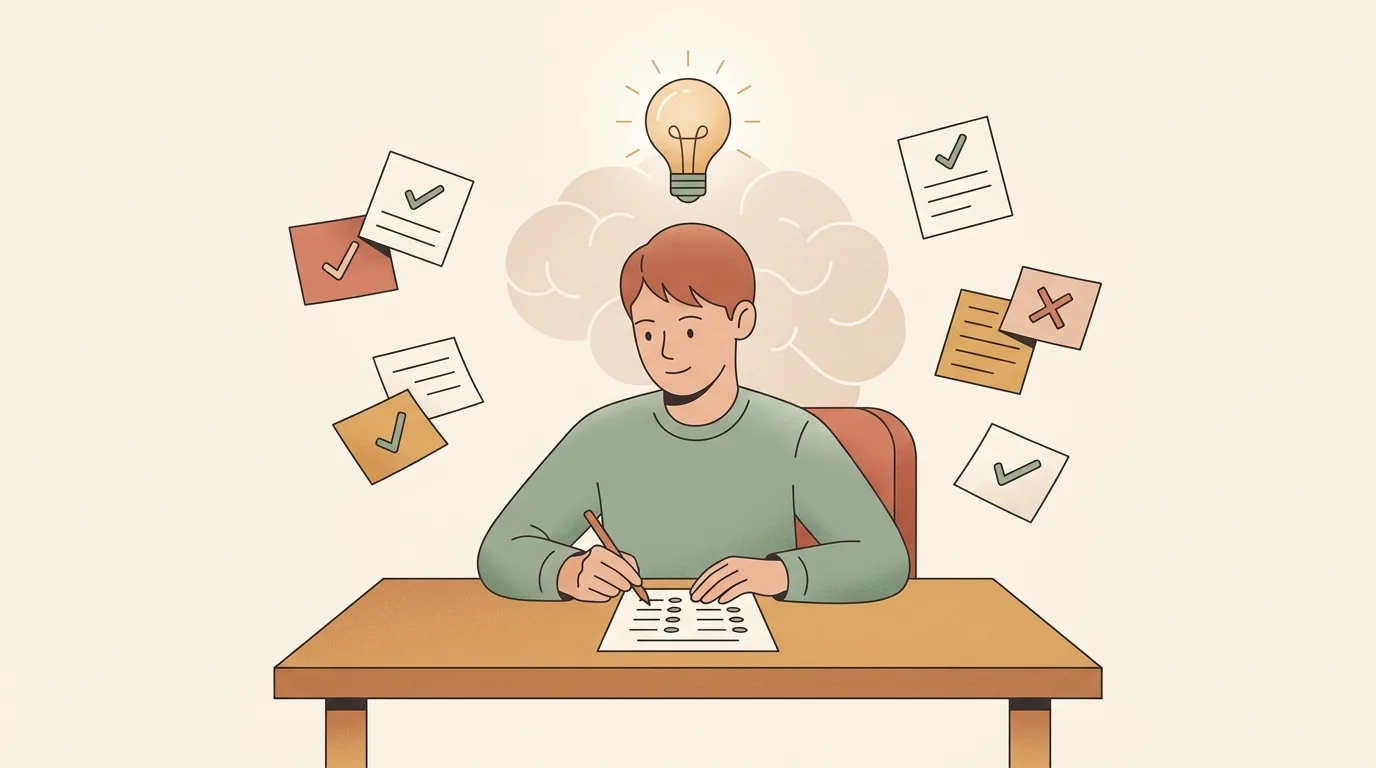
Research by Roediger and Butler (2011) on the testing effect revealed something important: younger students often overuse passive review strategies. They re-read. They highlight. These feel productive because they create a sense of fluency. But that fluency is a trap. You recognize the words without being able to retrieve the concepts.
The mechanism matters here. When you re-read, you're not building memory traces. You're exercising recognition memory, which is different from the recall ability you'll need on exams. Retrieval practice, by contrast, strengthens the neural pathways you'll actually use when you need the information.
Younger learners also benefit from what Bjork and Bjork (2011) call "desirable difficulties." Strategies that feel hard in the moment, like spacing your practice or testing yourself before you feel ready, produce superior long-term retention compared to easier strategies that feel more comfortable.
The practical problem: younger brains often avoid these difficulties because they feel like failure. The discomfort of not knowing triggers avoidance.
The Peak Phase: What Changes in Your Thirties and Forties
Here's something researchers discovered that surprised even them: fluid intelligence, the ability to think abstractly and solve novel problems, peaks in your late twenties and early thirties. But crystallized intelligence, the knowledge you've accumulated, keeps growing.
This means your thirties and forties might actually be your peak learning years for certain types of material. You have more background knowledge to connect new information to. You have more experience with your own learning process. You can often spot patterns faster.
But something shifts too. Working memory capacity tends to decrease gradually after your early twenties. This doesn't mean you get stupid. It means you process less information simultaneously. Where a twenty-year-old might hold several pieces of a complex problem in mind at once, a forty-year-old might need to externalize some of that through notes or diagrams.
This is why older learners in their prime working years often benefit from breaking complex material into smaller chunks. The cognitive load is real, but manageable when you structure information intentionally.
Craver-Lederman et al. (2021) found that professionals in their forties and fifties often showed advantages over younger colleagues when learning new job-related material, specifically because they used more deliberate encoding strategies. They were slower, but they were building deeper, more interconnected knowledge structures.
The trap here is overconfidence based on experience. If you've always been a fast learner, you might assume your old strategies still work. Sometimes they don't.
The Later Years: What Older Adults Actually Need
The research on aging and memory is more hopeful than the cultural narrative suggests. Yes, episodic memory declines. Yes, the speed of processing slows. But semantic memory, your knowledge of facts and concepts, remains relatively stable well into your seventies and eighties.
The challenges that do emerge are specific. Naveh-Benjamin et al. (2007) documented that older adults often struggle more with associative memory, the ability to remember connections between items. Remembering that a particular researcher studied at a specific university, that a date connects to an event, that a concept applies to a particular case. These bindings weaken.
The good news: older adults can compensate with what researchers call "elaborative encoding." If younger learners can get away with shallow processing, older learners genuinely cannot. The information needs to be connected to existing knowledge, visualized, made meaningful. This feels like more work, and it is, but it works.
There's also a finding that surprises people: older adults often outperform younger ones on tests of real-world knowledge. Not because they're smarter, but because they've had more time to accumulate it. The key is recognizing that new learning might require different strategies than applying existing knowledge.
Older learners frequently report that they learn best when they understand why something matters. This isn't just preference. It's cognitive reality. Meaningful, self-relevant information gets processed more deeply and retained longer.
How to Use This
The point isn't to put yourself in a box. The point is to notice what's actually hard for you and address it directly.
If you're under 25: Stop relying on re-reading. Add retrieval practice to every study session. Use flashcards. Test yourself before material feels settled. Embrace the discomfort of not knowing. That's the signal that learning is happening.
If you're 25 to 50: Pay attention to working memory limits. Don't try to hold too much in your head at once. Write things down. Use external structure. And if you notice yourself defaulting to old strategies that used to work, ask whether they're still serving you.
If you're over 50: Invest extra effort in making connections. Relate new information to what you already know. Create visual associations for anything that requires binding multiple pieces. Accept that slower processing is not weaker processing. You're building different, deeper knowledge.
Across all ages: space your practice. The research on spacing effects is among the most robust in cognitive science. Reviewing material over days and weeks produces dramatically better retention than cramming, even when cramming feels more productive in the moment.
The Real Question
We're so focused on what students should learn that we rarely ask whether they're learning in ways that actually match how their brain works. Most study advice is written for an abstract learner who doesn't exist.
What would change if you stopped trying to learn the way you think you should, and started paying attention to what actually works for you?
Put the ideas into practice
Use Piply to organize materials and practise what you’re learning.
Try Piply