 iOS App
  Android App
 Study tips
The Yerkes-Dodson Law: Why Some Pressure Helps You Perform and Too Much Breaks You
Elizabeth Nune
The Strange Nature of Exam Performance
Here is something most students experience but few understand. You walk into an exam moderately prepared and something happens that surprises you.
You perform better than you expected. The material clicks. The recall is fast. You finish feeling genuinely capable.
Then there's the other scenario. You're deeply prepared. You know the material inside and out.
But on the day, something goes wrong. Your mind goes blank. Simple questions feel complicated. You second-guess answers you had solid on the walk to the exam room. You come out feeling wrecked and the result is worse than the first scenario.
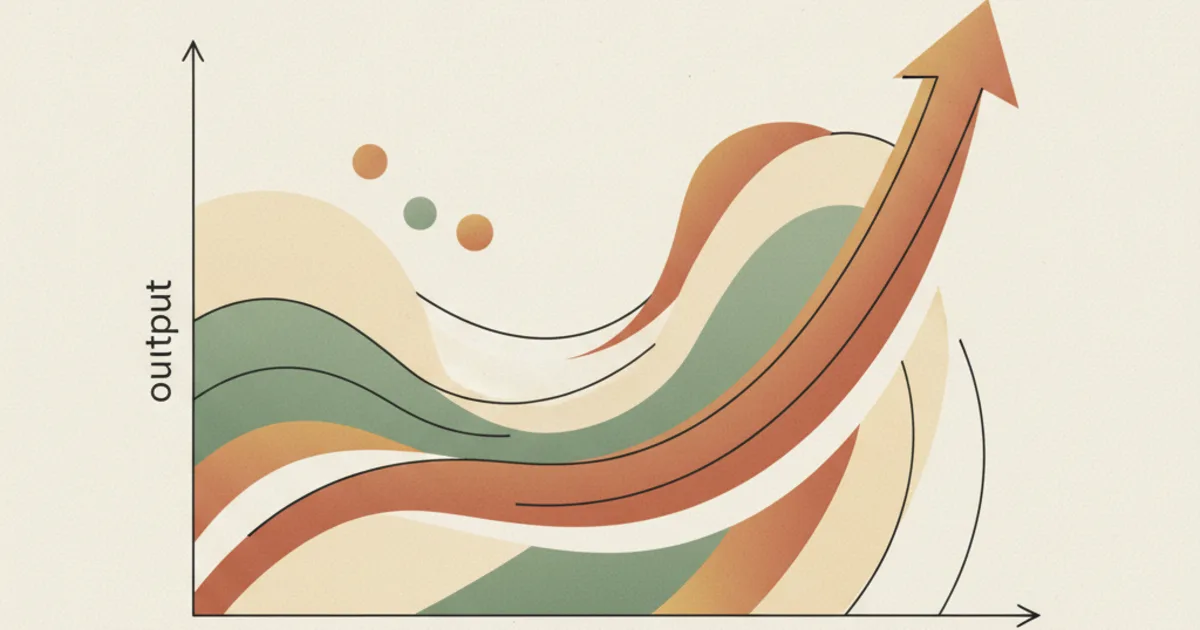
What is the difference between those two outcomes? Often it's the level of pressure you're carrying at the moment of performance. The relationship between pressure and performance isn't linear. It's shaped like an inverted U.
The Yerkes-Dodson Law
In 1908, psychologists Robert Yerkes and John Dodson published research showing that performance increases with arousal up to a point, then declines as arousal continues to climb. They tested this with rats in maze experiments, but the principle has been replicated in humans across dozens of studies involving memory, attention, motor skill, and academic performance.
The shape of this relationship is consistent enough that it has a name: the Yerkes-Dodson law. At low arousal, performance is mediocre.
You're bored, understimulated, and your attention drifts. As arousal increases, performance improves. You're alert, focused, energized. At a certain point, you reach peak performance. Then if arousal keeps climbing, performance declines. You become anxious, reactive, and your working memory narrows or simply fails.
For students, this means two things. First, going into an exam with zero stress is actually a disadvantage. A small amount of pressure is a performance asset.
Second, going in with too much pressure is actively destructive, even when you know the material better than your calmer self did.
What Research Actually Shows for Students
A study published in the journal Learning and Individual Differences in 2025 examined test anxiety and recall performance across 340 university students. The researchers found a clear inverted-U relationship between self-reported anxiety levels and exam scores. Students in the moderate anxiety range outperformed both students with very low anxiety and students with very high anxiety. The difference between the highest-performing group and the most anxious group was roughly one full grade point on average.
The mechanism is related to working memory bandwidth.
When anxiety is moderate, the brain is alert enough to access stored information quickly. When anxiety is too high, the prefrontal cortex, which manages working memory and retrieval, becomes partially hijacked by the stress response.
The brain is spending its bandwidth on managing fear instead of managing recall.
Research from the University of Cambridge published in 2024 looked at how cortisol spikes affected memory retrieval in high-pressure exam conditions. Students who showed the sharpest cortisol spikes before an exam performed significantly worse on recall tasks compared to students with more moderate physiological responses to the same exam conditions.
The students who performed best weren't the most calm. They were the ones who had learned to interpret arousal as energy rather than threat.
The Interpretation Problem
Here's the actionable part. Two students can walk into the same exam with the exact same physiological arousal level. One experiences it as excitement and performs well. The other experiences it as dread and performs poorly.
This isn't magic. It's appraisal. How you interpret your own stress response changes what that response does for you. Research on this is robust. In a landmark study by professors at Stanford and the University of Michigan, participants who were taught to reinterpret their stress response as preparation and energy showed a 23 percent improvement in performance on a high-stakes cognitive task compared to a control group who were told to try to relax. Both groups had the same stress hormone levels. The difference was entirely in what those levels meant to them.
For students, this has a direct implication.
Telling yourself to calm down before an exam is often the wrong strategy. Calming down shifts you toward the left side of the Yerkes-Dodson curve, where performance is actually lower.
Reframing the physical sensations of stress as signs that you're ready and capable is more effective than trying to eliminate the stress.
Practical Applications
Understanding the Yerkes-Dodson curve changes how you should approach both preparation and exam day.
On preparation: one reason that practicing under timed conditions works is that it normalizes the stress response. If your only experience of time pressure is the actual exam, you walk in with a novelty stress response on top of the actual stress. Students who practice under conditions that simulate moderate pressure build a reference point so that the real exam stress feels familiar rather than overwhelming.
On exam day: arrive with enough time to settle but not so early that you sit in silence with nothing to occupy your mind. Idle anxiety is the most dangerous kind on the left side of the curve. If you're pacing, that isn't a sign of weakness. It might be the appropriate arousal level finding its expression.
Avoid what you can't control. Comparing yourself to other students in the hallway before an exam is one of the fastest ways to spike your arousal past the peak and into the decline zone. Social comparison is a pressure amplifier and it works in the wrong direction almost every time.
The Sweet Spot Is Different for Everyone
The optimal point on the Yerkes-Dodson curve varies by student. Some people perform at their best with moderate excitement. Others need a very calm state to access their best performance.
The key is learning where your own peak is and how to approach it deliberately rather than accidentally.
You can find your own optimal arousal level through practice testing under varied conditions. Some students peak when they're mildly sleep-deprived. Others perform best fully rested and relaxed. There's no universal correct answer. There's only finding your own pattern and working with it.
The students who perform consistently well across exams have usually practiced under enough pressure that the exam room doesn't feel like an alien environment.
Piply study sessions help make pressure familiar before exam day. No artificial urgency. Just practice that feels like practice.
Put the ideas into practice
Use Piply to organize materials and practise what you’re learning.
Try Piply