Piply Logo
Piply
study-tips

The Hidden Cost of Decision Fatigue: Why You Study Better After a Break

The Hidden Cost of Decision Fatigue: Why You Study Better After a Break

The Afternoon Problem

You wake up feeling sharp. You sit down with a problem set and the first several questions feel almost automatic.

You're making progress. You're confident.

By 2 or 3 in the afternoon, something has shifted. You're reading the same type of problem you solved effortlessly at 10am and it feels like you're looking at a foreign language. You try again.

You start again. You read the worked example again. Nothing connects.

You assume you're tired. Or that you didn't sleep well enough. Or that the material suddenly got harder.

Sometimes those things are true. Often you're also running into decision fatigue.

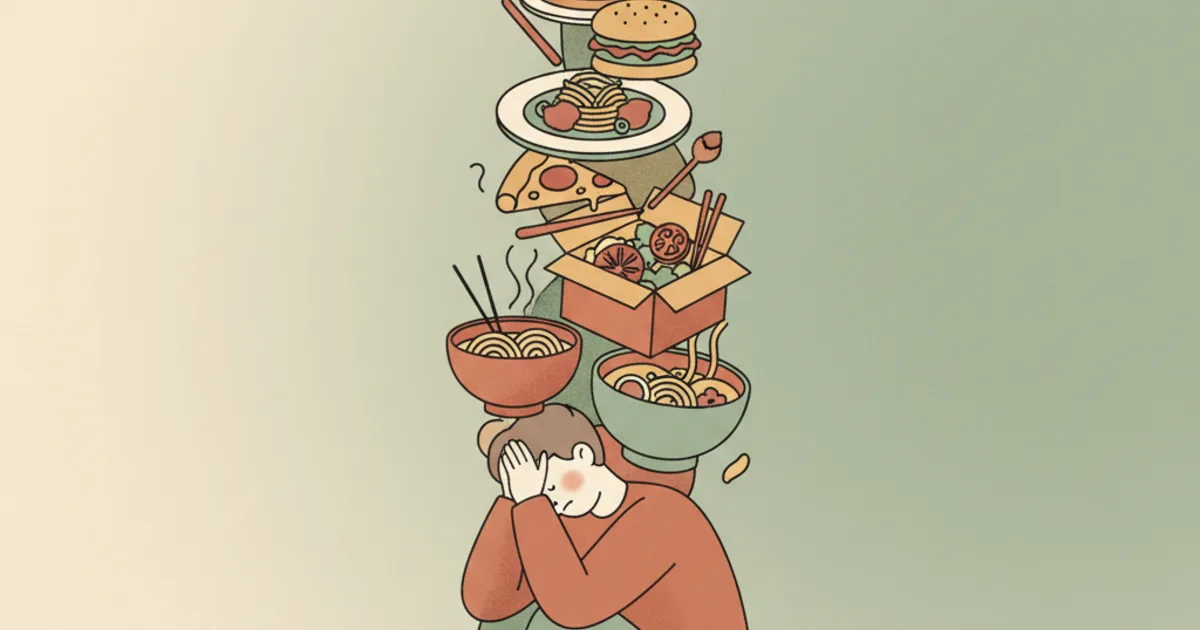
Decision fatigue is the accumulated strain on your capacity to make decisions after a long period of decision-making.

It was studied by Roy Baumeister and colleagues through a series of experiments on ego depletion, and it has been studied in academic settings ever since. The basic finding is straightforward: the more decisions you make throughout the day, the harder each subsequent decision becomes.

This isn't metaphor. It shows up in brain scans. It shows up in grades.

What Is Actually Happening in Your Brain

The mechanism behind decision fatigue comes from the same resource as willpower: executive function. Executive function is the set of mental processes that lets you plan, focus, evaluate options, and control impulses. Every time you make a decision, you draw on this same limited pool.

Not just big decisions like choosing a major or deciding whether to drop a class. Every small decision does the same thing.

Should I study now or in 20 minutes? Should I start with chemistry or physics? Should I look up this formula or try to recall it first? Should I eat something now or keep going? These micro-decisions each consume a small amount of executive resource. Individually they're negligible. Over a full day of navigating classes, meals, social interactions, assignments, and deadlines, they accumulate into a real deficit.

When the pool runs low, your brain starts taking shortcuts. It becomes more prone to impulse choices. It tends toward defaulting to whatever feels easiest or most familiar. It stops weighing options carefully and starts looking for reasons to stop deciding altogether. This is why students at the end of a long day often end up scrolling their phones instead of studying, not because they don't care, but because continuing to decide requires resources that are already spent.

The Research on Students and Decision Fatigue

The link between decision fatigue and academic performance has been documented in several studies.

Research from the University of Minnesota and published in the Journal of Personality and Social Psychology found that judges granted parole to prisoners more readily early in the day and after breaks. The later in the day and the more rulings they had already made, the more conservative and risk-averse their decisions became. This has direct implications for students.

When you've been making decisions all day in class, in labs, in tutorials, the decisions you face during evening study are being made with a depleted system. The quality of those decisions suffers.

A 2024 study published in Frontiers in Psychology examined decision fatigue among university students directly. Researchers tracked students across a full academic day, measuring cognitive load, self-regulation, and academic outcomes. They found that students who reported high decision overload at midday showed significantly lower performance on evening problem-solving tasks, even after controlling for sleep quality, caffeine intake, and total study time. The mechanism was consistent: executive function depletion reduced the ability to evaluate problems accurately and persist through difficulty.

Another relevant study came from Duke University, where researchers looked at the timing of academic decisions. Students making important academic choices like course selection or major declaration showed patterns consistent with ego depletion. Choices made later in the day were more likely to be reversed, more likely to be risk-averse, and more likely to be influenced by immediate comfort rather than long-term benefit. The implication for studying is direct: when you approach a difficult problem at 9pm after a full day of decisions, you're fighting both the difficulty of the material and the depletion of the cognitive system you need to understand it.

Why Cramming Often Fails

This is also why late-night cramming tends to underperform compared to shorter, well-timed study sessions.

When you stay up late cramming, you're studying during peak decision fatigue. Your brain has spent the entire day making decisions. The executive resources available for learning are significantly reduced.

You can still read the material but the deeper processing required for understanding and long-term retention is harder to access. You're essentially trying to fill an already depleted reservoir.

The paradox is that cramming often feels productive. You're spending time with the material. You're going over content. But because you're operating with reduced executive function, the quality of the processing is lower. You might recognise material during the test more than you actually understand it. And because sleep deprivation follows, the consolidation window is also compromised. Information that was barely available during the cramming session doesn't transfer to long-term memory effectively.

What You Can Actually Do

You can't avoid most of the decisions a day requires. The move is to protect your decision-making capacity for the things that actually matter.

Here's what the research suggests.

Front-load your most important work. If you have a difficult problem set or material that requires genuine thinking, do it in the morning or immediately after a substantial break. Your executive function is at its peak. The quality of your decisions is highest. Don't waste that window on review and re-reading. Use it when it can do the most work.

Reduce micro-decisions during study. Remove as many small decisions from your study sessions as possible. Decide the night before what you'll study and in what order. Keep your study space consistent so you aren't deciding where to sit or what supplies you need. If you use a study app, go into the session with a clear task rather than deciding while you're studying. Each small decision you eliminate preserves resources for the actual content.

Schedule breaks strategically. Brief breaks do more than restore energy. They allow your executive system to reset. A 10 to 15 minute walk or a period of genuine rest, not scrolling your phone, gives your decision-making capacity time to recover. If you're doing intensive study, a short break every 90 minutes is more effective than a single long session.

Use routines to automate low-value decisions. Things like what you'll eat for breakfast, what time you start studying, and what order you cover subjects can become routines rather than daily decisions. This isn't about being rigid. It's about preserving decision-making energy for the moments when it actually matters. Highly productive people in every field use this strategy. It isn't a personality trait. It's cognitive management.

How This Connects to Piply

Piply is built with decision fatigue in mind. When you open a session in Piply, you aren't choosing between features or managing a feed.

You enter and you study. The session is clean and structured so that the decisions during your study time are about the material, not about the tool.

This design choice is deliberate. Every interface element that requires a decision is cognitive cost. Every notification is a micro-decision about whether to engage.

Every menu is a choice between options. Piply removes those costs from your study sessions so that your executive function is available for the work itself.

If you've ever opened a study app and felt immediately overwhelmed by options, or found yourself deciding what to do rather than actually doing it, that's decision fatigue operating in the interface. Piply is designed to be the opposite of that. One tap. One session. The decision is made before you arrive.

What to keep

Decision fatigue is one reason a problem can feel impossible at 9pm and ordinary at 9am.

The students who get the most out of their study time aren't the ones who study the longest. They're the ones who study when their decision-making capacity is at its peak, protect that capacity during sessions, and give themselves the breaks needed to recover it.

Study in the morning. Keep the session clean. Rest without substituting one form of decision-making for another.

Your brain has limits. Plan like those limits are real.

Piply keeps the study session simple: open, work, leave. Fewer choices around the tool means more attention left for the material.

Ready to try Piply?

Turn this article into your reality. Start studying faster today.

Try Piply for Free