 iOS App
  Android App
 Study tips
Sleep and studying: plan beyond the night before
Andy Anderson
What the research found
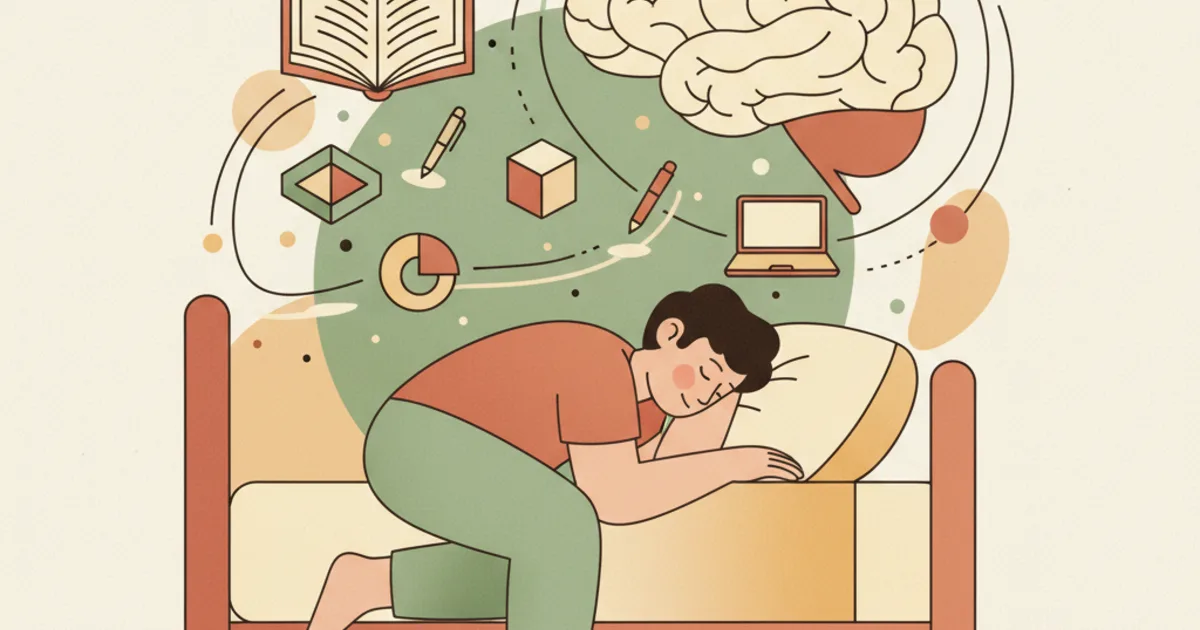
A study published in December 2025 tracked 33 university students for 14 days. Higher exam scores were associated with sleep efficiency, shorter time to fall asleep and less variation in several sleep measures. Total sleep time was not significantly correlated with scores.
A 2019 study followed 88 students who completed an introductory chemistry course study. Several sleep measures across the semester were associated with grades; sleep on the single night before a test was not. Both studies were observational. They do not establish that changing one sleep habit causes better grades.
Make the next session manageable
List the topics you still need to practise. Choose one concrete task for the time available, such as explaining a process or solving a problem and checking it against your material. Set a stopping point and record what remains for another session.
Work, caring responsibilities and class schedules affect what is possible. A study plan should account for those constraints. These studies do not prescribe an exact bedtime or an eight-hour rule for everyone.
Use Piply to organise the material
Bring your notes or course material into Piply and use review questions to check what you understand. Check generated answers against the source. Record the topics you need to revisit and choose your next study session around your own schedule. Piply does not assess sleep or guarantee grades.
Put the ideas into practice
Use Piply to organize materials and practise what you’re learning.
Try Piply