 iOS App
  Android App
 Study tips
Environment and Context: How Your Physical Space Shapes What You Remember
Piply Team
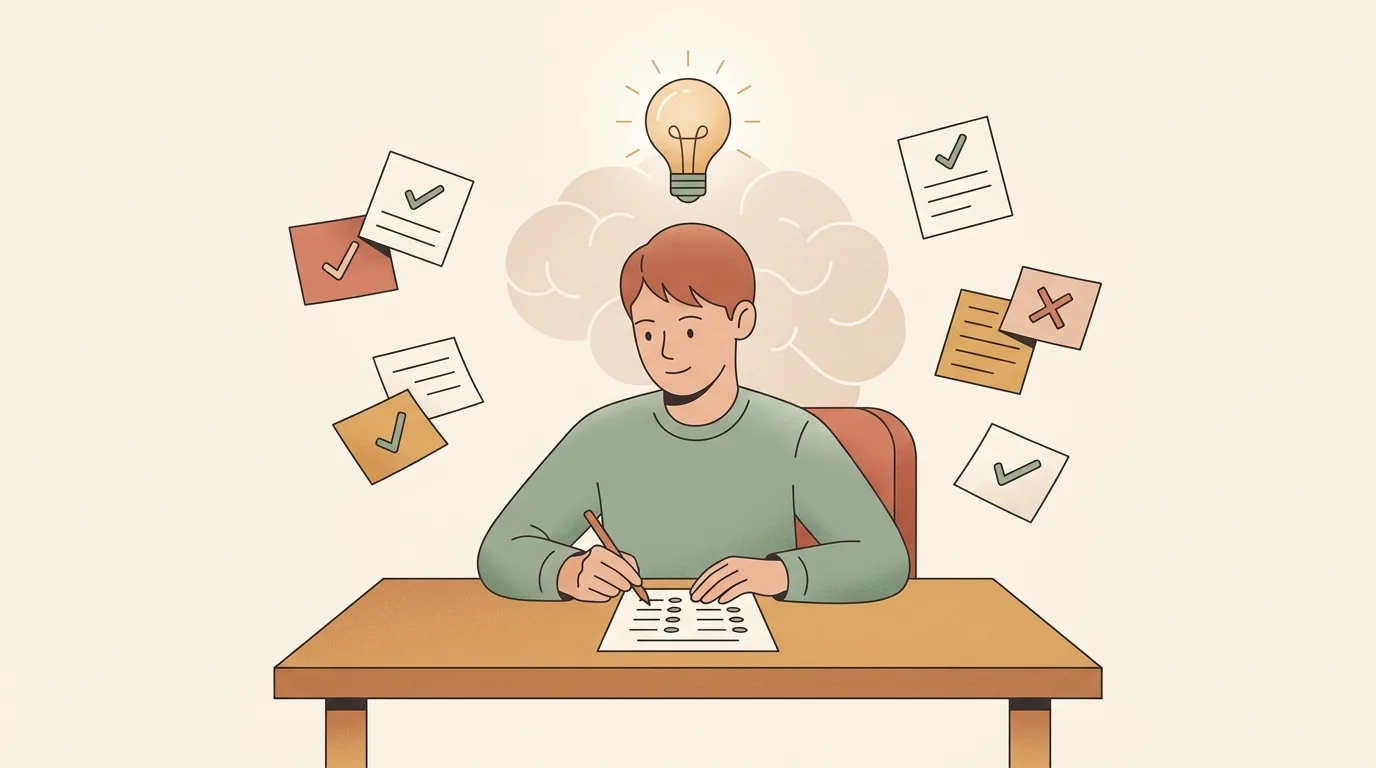
You already know cramming doesn't work. You've heard about spaced repetition, active recall, the whole deal. But here's something nobody talks about enough: where you sit while you study might matter just as much as how you study.
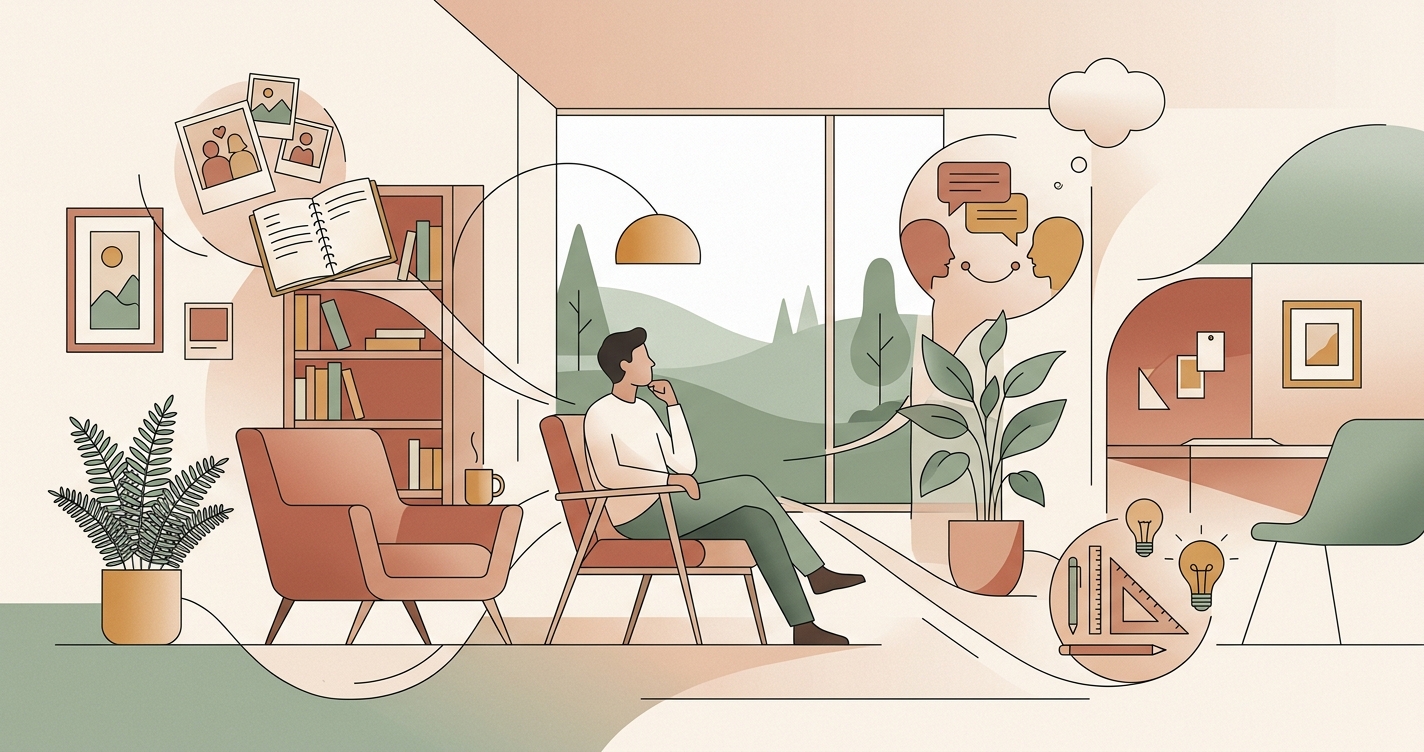
This isn't intuition. This is decades of research on something called context-dependent memory. The idea is simple. Your brain doesn't store information in isolation. It encodes it alongside everything around you. The room, the lighting, the ambient noise, even the chair. When you try to retrieve that information later, your brain looks for matching cues. And if the room doesn't match, retrieval gets harder.
Sound far-fetched? The research goes back further than you'd expect.
The Divers Study That Started Everything
In 1975, researchers Douglas Godden and Alan Baddeley ran an experiment that's become a classic in cognitive psychology. They had divers memorize words either on dry land or underwater. Then they tested them either in the same location or the opposite one.
The results were striking. Divers who learned words underwater remembered them better when tested underwater. Those who learned on land performed better on land. The difference was significant, around a 50% improvement in recall when the learning and testing environments matched.
This was published in the British Journal of Psychology, and it kicked off decades of follow-up research. Scientists kept finding the same effect with different contexts. Mood states. Internal physiological cues. Physical surroundings.
Why Does This Happen?
The leading explanation comes from encoding specificity, a principle developed by Endel Tulving. The idea is that memory traces include the context at the time of encoding. When you try to retrieve something, your brain checks whether the current context matches what was present when you stored it. If it does, retrieval flows more easily. If it doesn't, you're fighting uphill.
Think of it this way. Your memory isn't a file folder. It's more like a scene. When you walk into an exam room that looks nothing like your dorm desk, your brain has to do extra work to match the present moment to the past scene. That cognitive load costs you retrieval speed and accuracy.
Smith, Glenberg, and Bjork confirmed this pattern in 1978, showing that environmental context shifts happen even when people don't consciously notice them. In one condition, participants studied words in a small, cluttered room. In another, they studied the same words in a large, sparse room. Recall dropped substantially when participants were tested in the mismatched environment, even though they couldn't identify why performance suffered.
More recently, research has shown this effect extends to study location in a more specific sense. When students study material in the same room where they'll be tested, their recall tends to outperform those who studied elsewhere. This sounds like good news for classroom learning, but it cuts both ways. If you always study in the same specific spot, you might be creating a location cue that only fires in that exact context.
The Consistency Problem
Here's where things get complicated for students.
Many people instinctively find a favorite study spot. The same coffee shop. The same desk. The same corner of the library. This feels productive. Your brain associates that space with focused work. But research suggests this can create what psychologists call a contextual narrowing effect.
When you always study in one place, you strengthen the association between that location and the material. This makes your recall better in that context. But it can make recall harder in other contexts. If your exam is in a fluorescent-lit lecture hall and your study sessions are in a dim coffee shop, you're creating a mismatch.
There's also the issue of environmental interference. Some students study with music, with TV in the background, in cafes full of chatter. The research on this is mixed. Some studies suggest moderate ambient noise can actually boost creative tasks. But if your study environment is too stimulating or too inconsistent, you're encoding the material alongside a lot of irrelevant contextual noise. That noise travels with you when you try to recall the material somewhere quieter.
How to Use This
The goal isn't to engineer a perfect study environment. It's to understand how context shapes your memory and use that knowledge deliberately.
1. Study where you'll be tested, when possible. If your exam is in a lecture hall, some of your study sessions should be in a similar space. This doesn't mean you need to replicate every detail. But the general lighting, seating arrangement, and noise level matter.
2. If you can't match the test environment, vary your study environments. Research by Smith and Vela in 2001 found that studying across multiple locations can actually strengthen memory by reducing reliance on any single context cue. This is sometimes called interleaved context learning. The material gets encoded with multiple environmental associations, making retrieval more flexible. So if you can't study in lecture halls, mix it up. Study at home sometimes, in a library sometimes, outside sometimes. Your memory becomes less dependent on any one match.
3. Minimize distracting context cues during active recall. When you're testing yourself on material, try to do it in a plain environment with minimal distractions. Your brain should be doing the work of retrieval, not sorting through competing environmental signals. This is especially important for practice exams and timed drills.
4. Use location as a retrieval cue intentionally. If you do most of your studying in one place, you can actually use that to your advantage. Before an exam in a different location, briefly revisit your study space. Try to recall key material there first. Then carry that activation with you. Some students do a quick walk-through of their study spot the morning of an exam.
5. Pay attention to what your environment signals to your brain. Spaces carry meaning. Your desk might signal work. Your bed might signal rest. This isn't just psychology; it's behavioral conditioning. If you always study in bed, your brain may associate that location with alertness, which can interfere with sleep. Try to keep your most cognitively demanding study sessions in spaces that can handle that association.
The Point
You can't control every variable on exam day. But you can stop treating your study environment as neutral background noise. It's an active part of how your brain encodes and retrieves information. The room you're sitting in right now is shaping what you remember. The question is whether you're shaping it on purpose.
What's your current study space like, and have you noticed whether it matches where you actually need to perform?
Put the ideas into practice
Use Piply to organize materials and practise what you’re learning.
Try Piply