 iOS App
  Android App
 Study tips
Why Your Study Room Might Be the Reason You Forget Everything on Exam Day
Andy Anderson
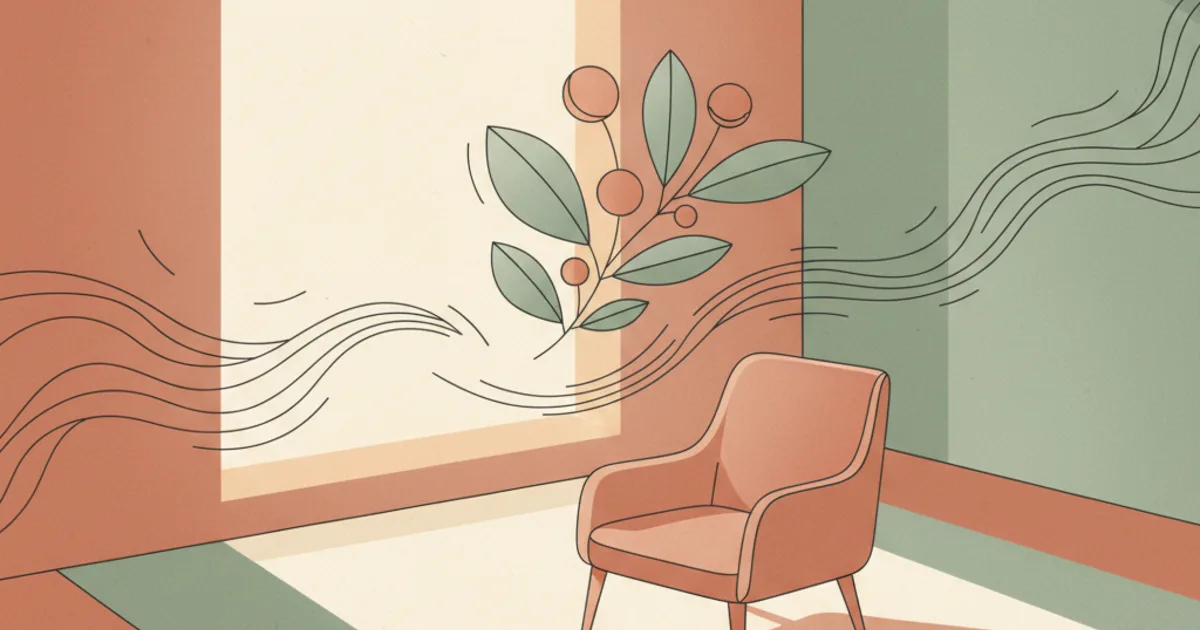
The Question That Stumps Students in Their Own Room
Think about the last time you sat down to study and something felt off. You were in your room, at your desk, maybe the same spot you always use. You read the material, you thought you understood it, you moved on.
Then on exam day, in a different room, you draw a complete blank.
The material was there in your bedroom. In the exam room, your brain can't find the file.
That can be an address problem.
Your brain stores memories along with the context in which those memories were formed. When you try to recall something, your brain uses the context as part of the retrieval cue. If the recall environment matches the encoding environment, access is faster and more reliable. If it doesn't match, the brain has to search harder, and sometimes it comes up empty.
Psychologists call this the encoding specificity principle.
Godden and Baddeley demonstrated it in a landmark study in 1975 when they had divers learn words either underwater or on land, then tested them either in the same or different environment. The divers recalled significantly more words when tested in the same environment where they had learned them.
This effect has been replicated in dozens of studies since, including in academic settings.
What This Means for Students
If you always study in the same place, you're building memories that are contextually anchored to that place. This sounds convenient. It isn't, because the exam room is almost never the same as your study room.
The solution isn't to find one perfect study environment. It's to study across multiple environments deliberately.
A 2024 meta-analysis published in Frontiers in Psychology examined 41 studies on environmental context-dependent memory and found a robust, reliable effect across different types of material and recall tasks. The effect was strongest when study and test environments were identical, but it was still significant and meaningful even with moderate environmental changes. The researchers concluded that context variability during learning creates more flexible, accessible memory traces that are less dependent on any single retrieval cue.
In practical terms: if you always study in your bedroom, your bedroom becomes the key that unlocks those memories. Take the same exam in a lecture hall and your brain is trying to open the lock with the wrong key.
The Multiple-Context Strategy
The research points to one useful habit.
Study the same material in at least two different locations. It doesn't have to be dramatic. Study in your room, then at a library desk, then at a coffee shop. Each location you study in becomes a potential retrieval cue on exam day. If the exam is in a lecture hall and you studied partly in a similar space, you have one more access point to your memory.
The key word is active engagement. Passive re-reading in multiple locations doesn't produce the same effect. You need to be processing the material, generating questions, testing yourself. The encoding has to be deep enough to create a meaningful memory trace that the brain bothered to anchor to the environment.
Godden and Baddeley's original research found that the context effect was stronger for deeper processing tasks. Surface-level rote study produced smaller context effects than meaningful learning. This means the benefit of environmental variety compounds when combined with active recall and elaboration.
State-Dependent Learning: The Layered Version
Environmental context isn't the only layer. Your physiological state at the time of encoding also affects retrieval.
Research on state-dependent memory shows that if you learn material while mildly anxious, you may recall it better in an anxious state than in a calm one. This sounds like a reason to study under stress, but it isn't quite that simple. The research also shows that matching states helps, but creating mismatches between encoding and retrieval can impair recall significantly.
For students, the practical concern is this: if you always study after a specific routine, like after coffee or after exercise, that routine becomes part of your retrieval context. Walking into an exam without your usual pre-study routine may cost you some access to memories formed under different conditions.
You don't need to replicate your exact study routine on exam day. Just remember that your brain is using more cues than you think, and varying your study conditions makes retrieval less fragile.
The Testing Room Problem
One of the most robust findings in context-dependent memory research is that students who study only in low-stimulation, familiar environments often struggle in high-stimulation or unfamiliar exam conditions. The retrieval environment is too different from the encoding environment.
This is distinct from test anxiety. Even students who aren't particularly nervous underperform on this basis. They studied in a quiet room and are now in an unfamiliar hall with different lighting, different seating, and different ambient noise. Their brains are searching in the wrong library branch.
The fix isn't to find the perfect simulation of the exam room during study. It's to ensure that your memory traces aren't overly dependent on any single environment. Study in your room. Study in a library. Study with background music sometimes and in silence other times. Vary the sensory context deliberately.
Making It Work Without Overcomplicating Everything
You don't need to redesign your entire study life around this. A few practical changes produce real benefits.
Study in at least two different physical locations for your most important subjects. You don't need to overhaul your routine. If you normally study only in your bedroom, add one session per week in a library or coffee shop.
That single change begins building more flexible, less context-bound memory traces.
Bring your own anchors if you can't vary the physical environment. Some research suggests that introducing a distinctive sensory cue during both study and recall, like a specific scent or type of music, can serve as a retrieval bridge across different physical environments. This isn't as strong as genuine environmental variability, but it's a practical workaround.
On exam day, arrive early enough to sit quietly in the room where you'll be tested. If possible, spend a few minutes in that physical space before the exam begins. Your brain will start loading the contextual cues from that environment, and the memories you encoded in similar contexts will become more accessible.
What to keep
The way you structure your study environment shapes how accessible your knowledge is when you actually need it. Memories encoded in one context are easier to retrieve in that same context and harder to retrieve in different ones.
Vary your environments. Study in multiple places.
Make your knowledge less dependent on the accident of where you happened to be sitting when you learned it.
Your brain has a filing system. Give it multiple ways to find the right folder.
Contexts are everywhere: room, time of day, physical state, emotional state. Piply study sessions give you the flexibility to practice across different conditions, so no single context becomes a requirement for recall.
Put the ideas into practice
Use Piply to organize materials and practise what you’re learning.
Try Piply