 iOS App
  Android App
 Study tips
The Real Reason You Can't Focus After 2 Hours of Studying: Digital Fatigue
Elizabeth Nune

The Fog Before The Notes
You've been there. You open your laptop, pull up your notes, and start working.
For the first 30 minutes things are reasonable. Then the fog rolls in. Words stop registering. Problems that should be straightforward require more effort. You read the same sentence three times. You assume you're tired, or that you didn't sleep well enough, or that the material is harder than it seemed.
You might be missing the actual cause. That fog isn't random.
It's the accumulated cost of digital exposure stacking up against your brain's attention systems, and it starts long before you open a textbook.
Digital fatigue is the gradual deterioration of cognitive performance that results from sustained screen exposure, especially on complex or fast-paced content. It isn't the same as feeling tired. It's a specific kind of cognitive depletion that affects working memory, sustained attention, and executive function. And most students are experiencing it every single day without knowing what is happening to them.
What the Research Says
A 2025 study published in Scientific Reports examined digital fatigue and academic resilience among university students, with grit and flexibility as mediators.
The researchers found that digital fatigue was a significant predictor of academic performance decline, independent of sleep quality and total study time. Students who reported higher levels of pre-study digital exposure showed measurably lower sustained attention scores during study sessions.
The effect held even when controlling for hours slept and prior GPA.
The mechanism the researchers identified was consistent with established neuroscience. Sustained visual processing of fast-paced digital content, especially social media or information-dense platforms, depletes prefrontal cortex resources that are the same resources required for focused academic work.
The brain isn't a multitasker. It's a competition manager. When it has been handling high-bandwidth visual input, the well that focused attention draws from is partly empty before you even start studying.
A separate 2025 study from Frontiers in Psychiatry examined the impact of media multitasking on academic performance during online learning. The researchers found that relevant media multitasking, meaning the simultaneous use of digital devices while trying to learn, was associated with significant academic performance decline. The effect was serial rather than single.
Every task switch between a learning platform and another device or application carried a switching cost. That cost compounds over a session, and most students underestimate how much it accumulates.
The broader finding from this research is direct. Students who consume digital content heavily before a study session aren't starting from a neutral baseline. They're already running on depleted attention resources. The two-hour study session that feels hard might feel hard because 45 minutes of that cognitive capacity was spent before the first note was ever opened.
The Attention Budget Is Real
Cognitive science has a concept called attentional resources.
These are finite. They recover, but they recover on a different timeline than most students assume.
The recovery period for sustained attention after heavy digital use isn't seconds. Research on attentional restoration suggests that meaningful recovery requires what researchers call attention restoration, which happens in environments that are low in directed attention demands. Natural environments, quiet spaces, and non-screen activities are the settings where this recovery happens most efficiently.
Most students treat the break between digital use and study time as recovery time. They scroll their phones while eating, or they watch something while telling themselves they're resting.
But phone scrolling and video content aren't rest. They're directed attention tasks. The brain is still processing, filtering, and responding. True attention restoration requires genuinely low-demand input. This is why many students who take breaks that involve screens don't actually feel refreshed for studying.
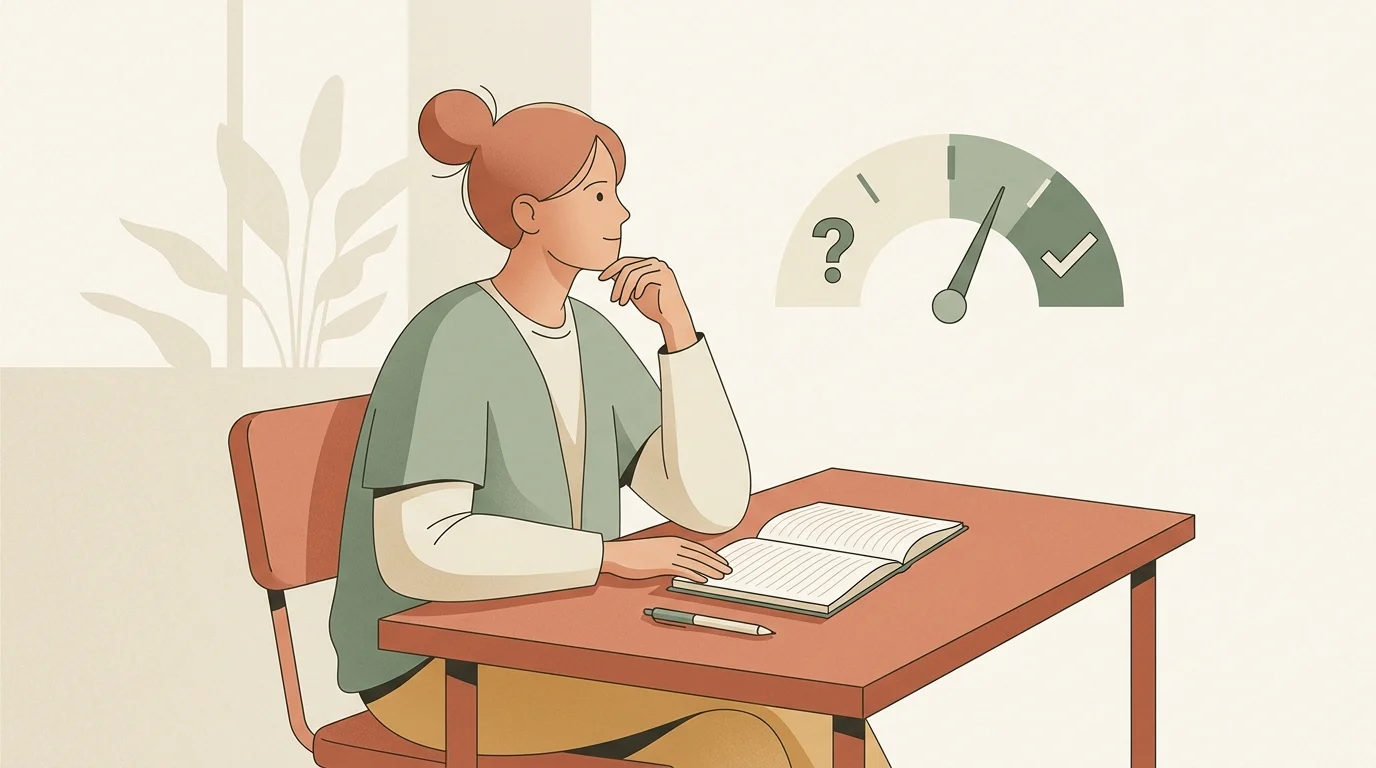
The practical implication is that your pre-study routine matters as much as the study session itself. If you spend 30 minutes on social media before sitting down with your notes, you aren't arriving fresh. You're arriving with an already-depleted attention account that you're trying to spend on hard cognitive work.
The Compound Problem
Digital fatigue is particularly damaging because it compounds in a way that's hard to detect. The first hour of study feels normal. The second hour feels harder. By the third hour many students aren't experiencing reduced motivation. They're experiencing a neurological limitation that no amount of intention will override. The prefrontal cortex can only maintain sustained effort under resource scarcity by reducing the quality of its output. That reduction shows up as distracted thinking, slower processing, and the feeling that material is suddenly more difficult than it was earlier in the session.
The reason this pattern is so common is that digital fatigue doesn't announce itself.
It doesn't feel like a headache or like clear exhaustion. It feels like the material stopped being interesting, or like you lost focus because you're lazy.
This misattribution is part of why students try to solve the problem with more willpower instead of removing the cause.
Research on media multitasking and academic achievement, published as a scoping review in Discover Education, found that higher levels of media multitasking were consistently associated with lower academic outcomes across educational levels. The effect wasn't small.
The association held across high school, undergraduate, and graduate students. Students who reported frequent task switching between devices during study time showed significantly lower GPA than would be predicted from their prior academic history alone.
What Actually Helps
Understanding digital fatigue changes what you can do about it. The solutions aren't complicated but they require treating the problem as structural rather than motivational.
Audit your pre-study digital exposure. Track how much screen time you've had in the 90 minutes before you sit down to study. This includes social media, messaging, videos, and any fast-paced content. You might find that the reason your 3pm study session feels impossible is that you spent the lunch hour scrolling. The material isn't the problem. The preparation was.
Build a genuine transition. Before studying, give yourself 20 to 30 minutes without screens. This isn't wasted time. It's the deposit that fills the attention account you'll be withdrawing from. A walk outside is particularly effective because it combines low-demand visual input with physical movement, both of which support attentional restoration.
Separate study devices from leisure devices. If you study on the same laptop you use for everything else, close every non-study application before starting. The mere presence of a open chat window, even one you aren't actively reading, creates a low-level attentional pull that competes with your study focus.
Manage session length against your real cognitive budget. If you know that your sustained attention holds up well for 60 to 75 minutes and degrades significantly after that, structure your sessions around that reality rather than trying to push through the degradation. Two focused 75-minute sessions with a genuine break between them will produce more learning than three hours of diminishing-quality effort.
Use physical notes or handwritten review as a reset. Writing by hand requires different cognitive resources than typing on a screen. If you're deep in a study session and feeling the fog roll in, a brief period of handwritten review or active recall with physical cards can provide a kind of cognitive reset that screen-based review doesn't.
The Honest Version
The reason this topic matters is that students spend enormous amounts of time and energy trying to outwork digital fatigue without ever addressing it. They add coffee, they use more willpower, they tell themselves to focus harder. None of that works because none of it removes the cause.
The cause is ordinary. Your brain has a finite amount of high-quality attention per day.
Digital content, especially social and fast-paced content, draws from that same account. When you spend it before studying, you arrive at the study session with less to spend. When you combine studying with device switching, you accelerate the depletion within the session itself.
The useful move is being honest about what a study session actually requires and protecting the attention that session demands. This might mean leaving your phone in your bag for 90 minutes before you study.
It might mean scheduling your hardest study blocks for times when you're genuinely fresh rather than after a morning of screen-based work.
None of this is revolutionary. It's just true. Your attention isn't infinite, and it isn't separate from your digital habits.
That's the annoying part.
Piply is built for focused study sessions where the goal is depth not duration. Protecting your attention starts before the session begins, and the right environment makes that easier.
Put the ideas into practice
Use Piply to organize materials and practise what you’re learning.
Try Piply