The Study Method That Feels Wrong But Works Better: Mixing Topics
The Study Pattern That Feels Right But Is Actually Holding You Back
Picture your typical study session. You open your notes and work through everything related to one topic.
Derivatives, then integrals, then limits. Or maybe it's biology. Cell types, then organs, then systems. You stay with each section until you feel like you understand it, then you move on. This is called blocked practice, and it's how most students naturally study.
It feels right. You're giving each topic your full attention. You're building competence one block at a time.
And the progress feels visible. When you finish a block, you can solve those problems. You've earned that skill.
There's just one problem. When researchers test students on interleaved practice against blocked practice, blocked practice consistently underperforms on tests that matter.
What Interleaving Actually Is
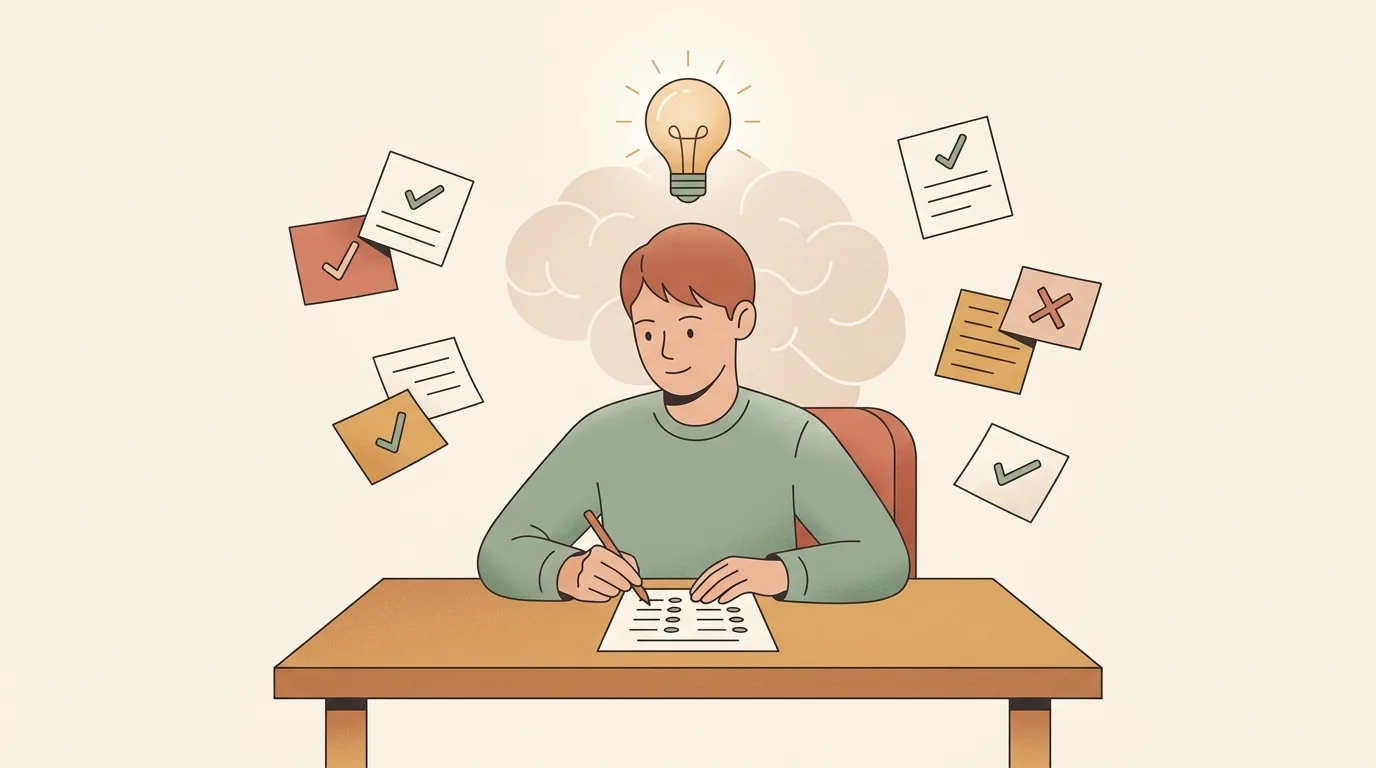
Interleaving is the practice of mixing topics during a study session instead of mastering one before moving to the next. Instead of working through 20 derivative problems in a row, you might do 5 derivative problems, then 5 integral problems, then 5 limits problems, then come back to derivatives. The order might be different each time.
The contrast with blocked practice goes deeper than order. It changes what your brain has to do during each approach.
Blocked practice lets your brain run on autopilot for most of a session. Once you have the pattern for a problem type, subsequent problems in the same block require almost no real thinking. Your working memory isn't engaged the way it would be if you were encountering something new.
You feel productive because you're solving problems quickly, but the cognitive work is shallow.
Interleaving forces your brain to switch contexts. That switch costs something in the moment. You can't cruise through 20 problems of the same type because there are only 5 of each type in the set. Your brain has to identify the problem type before it can attempt a solution. That identification step is cognitive work, and that work is exactly what produces lasting learning.
The Research That Changed How Scientists Think About Practice
The most compelling evidence for interleaving comes from a study published in npj Science of Learning by researchers including Rohrer and Taylor.
They tracked undergraduate physics students over 8 weeks. One group did homework problems arranged the conventional way, practicing one topic at a time.
The other group did the same problems arranged in an interleaved sequence, alternating between topics.
On surprise tests that included novel and harder problems, the interleaved group performed dramatically better. The median improvement was 50 percent on the first test and 125 percent on the second test. These weren't trivial gains.
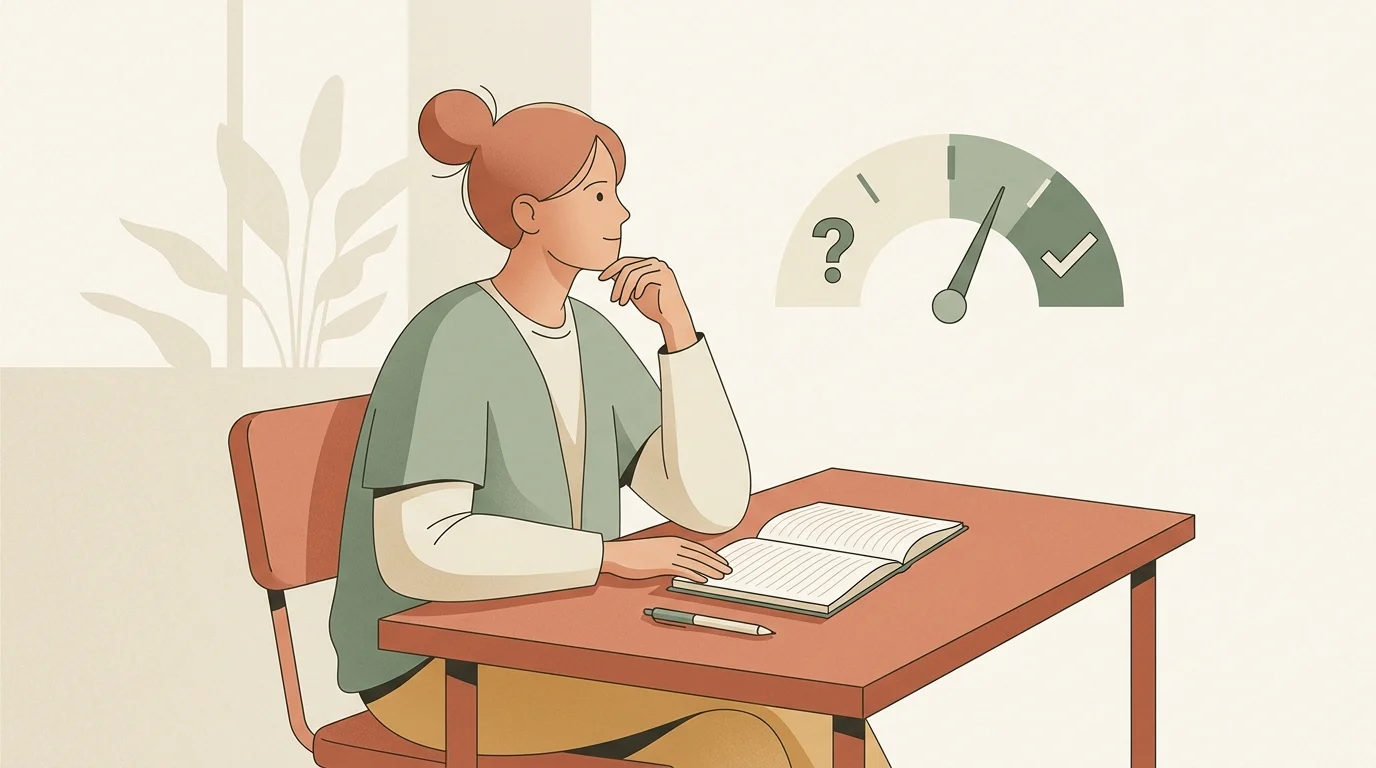
The twist is that students in the study rated interleaved practice as more difficult and said they felt like they were learning less. The researchers called this the illusion of fluency. When you're solving problems quickly in a blocked sequence, it feels like you've mastered the material.
When you're switching between topics and stalling on each one, it feels like you're struggling.
Sometimes that feeling is the useful part.
A 2025 study published in Applied Cognitive Psychology by Pan investigated interleaved and distributed practice strategies among undergraduate students. The findings reinforced that students who used interleaved practice showed better retention and transfer compared to those who relied on blocked study habits, even when total study time was the same.
The feeling of difficulty during interleaving isn't a sign that it isn't working. It's the mechanism by which it works.
Why Your Brain Needs the Struggle
There's a concept in cognitive science called retrieval practice. When your brain works harder to retrieve information, the retrieval process itself strengthens the memory trace. This is why active recall works better than passive re-reading, even though active recall feels harder.
Interleaving creates retrieval demands that blocked practice doesn't. When you switch from integrals to derivatives, you have to retrieve the relevant procedures from memory. You can't just apply the same mental routine you were using 30 seconds ago.
That retrieval effort is productive cognitive work, and it's exactly the kind of effort that builds durable knowledge.
There's also a comparison effect. When you learn related concepts in juxtaposition, rather than in isolation, you implicitly compare them. You notice what makes derivative problems different from integral problems, even when they look similar. That comparative processing creates richer and more flexible knowledge structures in long-term memory.
This is why interleaving is particularly powerful for subjects that involve categories or problem types. Math, physics, language grammar, and any subject where recognizing which category applies is part of the challenge. The recognition itself becomes part of the practice.
How to Use Interleaving Without Overwhelming Yourself
Interleaving sounds simple in theory. In practice, it needs a little setup.
First, collect your practice problems by type and label them. If you're studying math, have separate piles or problem sets for each topic. Don't mix them up before you're ready.
Second, create interleaved practice sets intentionally. Take 5 problems from topic A, 5 from topic B, and 5 from topic C. Shuffle them so the order is mixed. Some students find it helpful to write the topic name at the top of each problem so the identification step is explicit.
Third, start small. Interleaving your entire study session at once is a big adjustment. Try interleaving two related topics first. As you get more comfortable with the cognitive demands, expand to three or more.
Fourth, trust some discomfort.
If interleaved practice feels easy, you're probably slipping back into blocked practice.
Check your retention after a few days rather than immediately after the session. The data you care about is long-term retention and transfer, not how fast you solved problems during practice.
Does Piply Support Interleaved Practice
Piply study sessions are built around focused practice, and interleaving fits naturally into that structure. A session can cover multiple topics without the interface nudging you toward social features, notifications, or competing content. That clean focus makes it easier to structure interleaved practice sets deliberately.
The app doesn't prescribe a particular study method. It creates the conditions for the methods that research shows work. Interleaving is one of those methods, and it benefits from a distraction-free environment more than most.
What to keep
Blocked practice feels good. You make fast progress, you feel competent, and the immediate feedback is positive. Interleaving feels slower and harder even when it produces better long-term results.
Most students avoid interleaving because it violates a strong intuition: more of the same thing should mean more learning.
The intuition is wrong often enough to be expensive.
Mix topics for part of your practice. Don't turn your whole study life upside down.
Just stop doing twenty identical problems in a row and calling that mastery.
Study sessions in Piply give you a clean space to practice deliberately, including interleaved sessions across multiple topics. No feeds, no distractions. Just practice.
Ready to try Piply?
Turn this article into your reality. Start studying faster today.
Try Piply for Free