Piply Logo
Piply
study-tips

What Is Spaced Repetition? The Science-Backed Technique That Beats Cramming Every Time

A
by Andy Anderson

What Is Spaced Repetition? The Science-Backed Technique That Beats Cramming Every Time

Here's a question that gets asked on studying forums more than almost anything else: "I have new content from 4 different classes every week — how am I supposed to both learn the new stuff AND review everything from previous weeks? It seems impossible."

That's not a time management problem. That's a method problem.

Most students review material the same way they do everything else: go over it when it feels urgent, and avoid it when it doesn't. This means you study something for the first time, feel okay about it, and then don't look at it again until the exam is three days away. By then, you've forgotten most of it — and you're back to cramming.

Spaced repetition breaks that cycle entirely. It's not a new hack or a productivity trend. It's one of the most replicated findings in 130+ years of memory science, and once you understand how it works, you can't unsee how much time you've been wasting.


The Forgetting Curve: Why You Lose Information So Fast

In the late 1800s, German psychologist Hermann Ebbinghaus memorised lists of nonsense syllables and then tracked how quickly he forgot them. What he discovered was uncomfortably predictable: without review, humans forget roughly 70% of new information within 24 hours and up to 90% within a week.

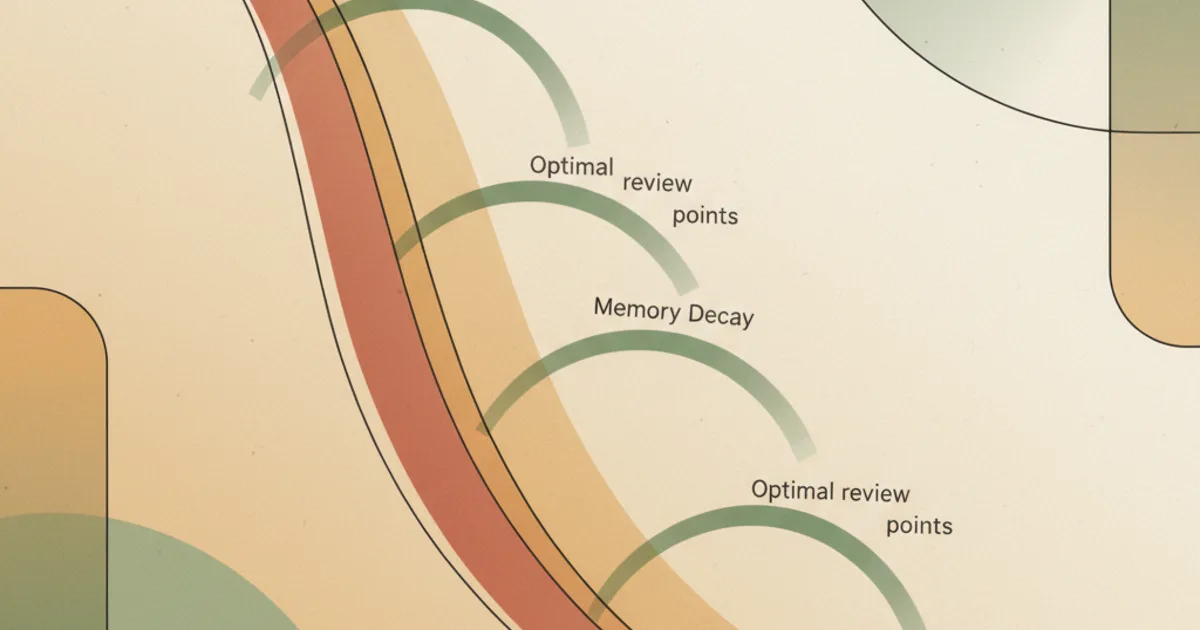
This became known as the forgetting curve — a steep, exponential drop-off in retention that happens every time you learn something new and then walk away from it.

But Ebbinghaus also found something more useful: every time you review that information before it fully slips away, the forgetting curve resets and flattens. The next drop-off is slower. Review it again at the right moment, and it flattens further. Eventually, the memory becomes durable enough that you barely need to review at all.

That's the entire logic of spaced repetition. It's not about reviewing more — it's about reviewing at the right time.


What Is Spaced Repetition, Actually?

Spaced repetition is a study method where you review material at systematically increasing intervals — spaced out over time, rather than massed into a single session.

Instead of reading a chapter three times in one sitting, you read it once, revisit it the next day, then three days later, then a week later, then two weeks later. Each review comes just before you'd naturally forget it — which is the optimal moment for the memory to consolidate.

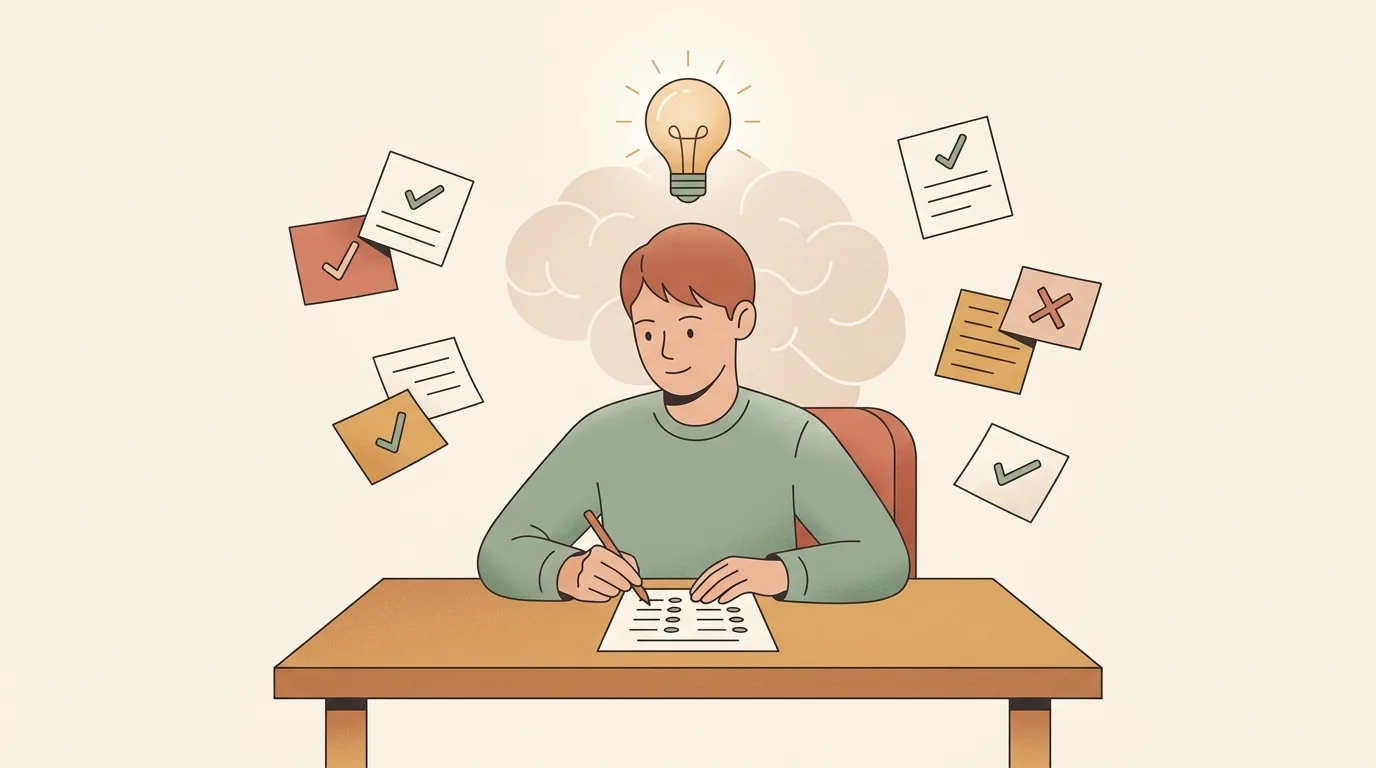
When you combine spaced intervals with active recall (testing yourself rather than passively re-reading), the effect is even stronger. This combination — retrieve the information, space out the retrievals — is the most effective study system cognitive science has ever identified.

A landmark 2006 study by Roediger and Karpicke gave two groups of students the same material. One group studied it four times. The other studied it once and took three spaced practice tests. A week later, the tested group remembered significantly more — despite spending less total time with the material. The act of retrieval, spaced over time, is what builds durable memory.


The Problem Most Students Run Into

Here's the real reason students don't use spaced repetition: the cognitive overhead is brutal.

You have to decide what to review. You have to track when you last reviewed it. You have to remember what's due today across five different subjects. You have to make the flashcards in the first place.

People in the r/GetStudying community describe it perfectly: "I love the idea of spaced repetition but no matter how hard I try it seems impossible to actually implement."

Tools like Anki are powerful but notorious for their learning curve. Students spend hours building elaborate decks, then get buried under hundreds of daily reviews and give up entirely. The algorithm is working — but the setup cost is too high for most people to sustain.

This is the gap between understanding spaced repetition and actually using it.

Most guides explain what it is. Very few address why it's so hard to execute — and what to do about that.


How to Actually Do Spaced Repetition (Without the Overwhelm)

Start with the material you already have

The biggest mistake is trying to re-create your entire course in flashcard form before you can even begin. Start with what you learned this week. One topic. Create questions about it, test yourself, and schedule a review for tomorrow. That's it.

Use the SM-2 interval as a rough guide

The SM-2 algorithm — the basis for most spaced repetition software — suggests roughly these intervals for a card you're learning:

  • Day 1 (first review)
  • Day 3
  • Day 7
  • Day 14
  • Day 30

If you get it wrong, you reset to the beginning. If you get it right consistently, the interval keeps growing. You don't need software to do this manually for a handful of topics, though software makes it much easier at scale.

Separate "learning" from "reviewing"

One source of overwhelm is mixing new content with review sessions. Try this: dedicate the first 20 minutes of each study session to reviewing what's already due. Then spend the remaining time on new material. When you're done, note what you just learned and when to review it. This keeps the two activities from colliding.

Keep cards atomic

If your flashcard has five facts on it, you don't know which ones you actually remember. Keep each card to a single question, a single concept, a single fact. Smaller cards are easier to answer, easier to schedule, and give the algorithm accurate data to work with.


Why Cramming Feels Like It Works (But Doesn't)

The night-before cram session is one of the most common study strategies in existence — and one of the most scientifically discredited.

Cramming produces short-term recall through massed repetition. Your brain processes the same material over and over in a short time, and you can reproduce it on an exam the next morning. This is why the strategy persists: it works, in the short term.

But follow-up studies are brutal. Cram learners show steep forgetting curves within days of the exam. The information has not been consolidated into long-term memory — it was held in working memory just long enough to be useful, then released.

Spaced repetition, by contrast, produces retention that compounds. Each review session builds on the last. Information reviewed six times over six weeks is far more durable than information reviewed six times in one night — even though the total review count is the same.

The difference is time. Memory consolidation requires it.


The Real Advantage: You Study Less, Remember More

This is the counterintuitive outcome that surprises most students the first time they actually commit to spaced repetition: your total study time goes down.

Because you're reviewing material at optimal intervals, you're not over-reviewing things you already know or under-reviewing things you've forgotten. You're spending your study time exactly where your brain needs it. Over a semester, students using spaced repetition consistently report the same result: less time studying, higher exam scores.

A 2010 meta-analysis published in Psychological Science in the Public Interest reviewed 10 learning techniques and ranked them by effectiveness. Spaced practice came out at the top — rated "high utility" by the researchers. Re-reading, the most common study strategy, was rated "low utility."


Where Piply Fits In

The barrier to spaced repetition has always been execution. The theory is simple; the implementation is not. You need to track what you've learned, know what's due today, test yourself on it, and update your schedule — across multiple subjects, every week of a semester.

Piply automates that entire layer. When you upload your study materials — PDFs, lecture notes, textbook chapters — Piply generates flashcards and quiz questions directly from your content. You don't have to build decks from scratch. You don't have to guess when to review. The system handles the scheduling and surfaces the right material at the right time.

The result is spaced repetition that actually gets done — not because you're more disciplined, but because the cognitive overhead of running the system has been removed.

If you've ever wanted to use spaced repetition but found it too hard to sustain, that's the problem Piply is built to solve.


The Bottom Line

Spaced repetition isn't a life hack. It's the most evidence-backed learning technique available to students — grounded in over a century of memory science, validated by hundreds of studies, and consistently superior to every passive study method in head-to-head comparisons.

The reason most students don't use it isn't that it's too complex to understand. It's that the execution is genuinely difficult without the right system.

Understand the forgetting curve. Review before you forget. Space the intervals. Keep the cards atomic. And find a system that removes the overhead — so you can spend your energy on learning, not logistics.

Your future self, the one sitting in that exam room, will notice the difference.

Ready to try Piply?

Turn this article into your reality. Start studying faster today.

Get Started for Free