 iOS App
  Android App
 Study tips
How to Study for Exams in One Week , Without Losing Your Mind
Ben Roe
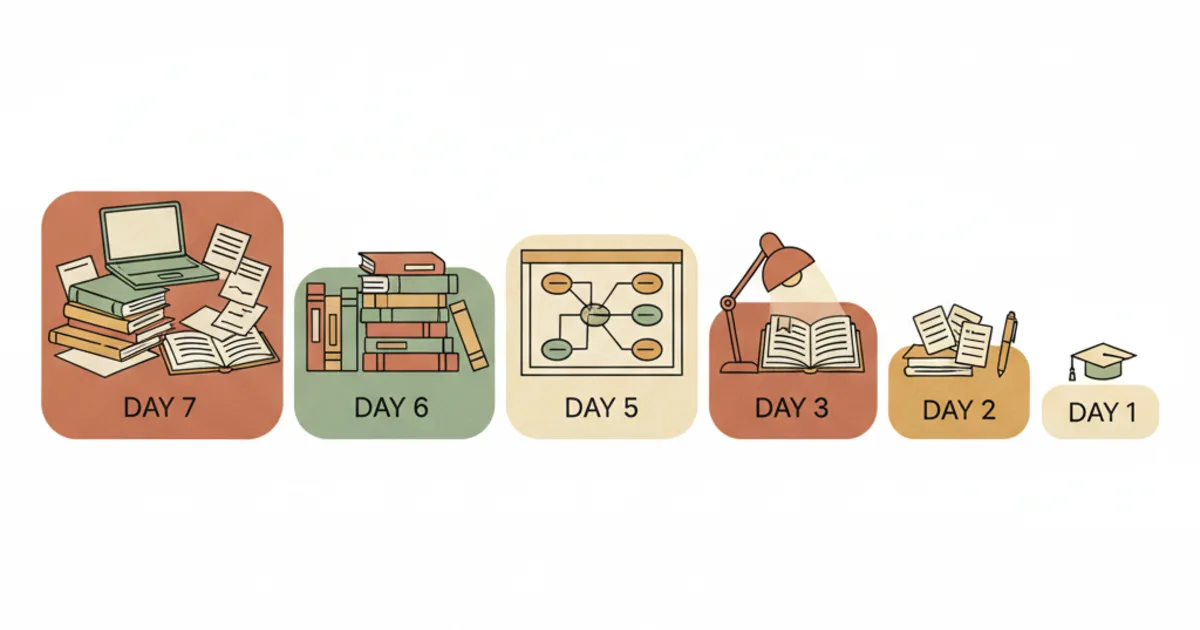
Seven days. That isn't nothing. It's also not a lot.
The students who panic and the students who cruise through finals week often know the same material. What separates them is whether they have a system for compressed study windows.
Here is how to use one week well.
The Wrong Approach
Most students start by reading. Re-reading, specifically. They open the textbook, start at page one, and work forward hoping to cover everything before the exam.
This feels like studying. It isn't.
Re-reading produces the illusion of competence. The text looks familiar.
The concepts seem clear. You understand it while you're looking at the page. Research by Roediger and Karpicke shows this reliably, students who re-read perform significantly worse on delayed tests than students who practice retrieval, even when re-reading students feel more confident.
The problem is that seven days of re-reading is enough to feel productive and not enough to actually retain.
What Actually Works in a Compressed Window
Day 1: Map the Territory
Before you touch a single chapter, you need to know what you're dealing with.
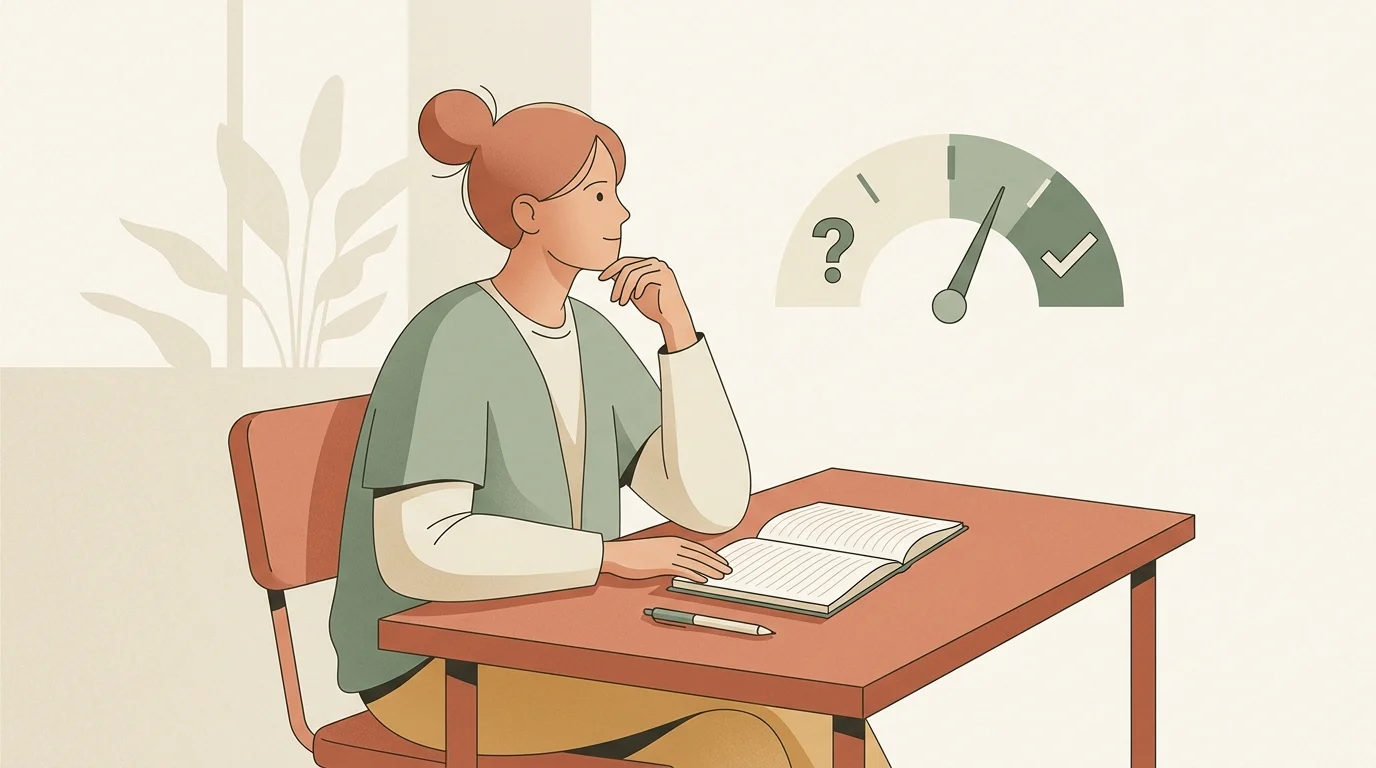
Go through every topic on the syllabus or exam outline and give it a quick rating:
- Green: you could explain this now without looking
- Yellow: you've seen it, the outline is familiar, but gaps exist
- Red: you either don't know this or it went by too fast in class
This takes thirty minutes and changes everything about how you spend the rest of the week. You stop treating every topic equally and start allocating time to where it actually matters.
If the professor posted practice exams, past exams, or sample questions, get those today. They're the clearest signal of what format and depth to expect.
Day 2,4: Retrieval Practice, Not Re-Reading
For each yellow and red topic, your study method should be:
- Read a section once, actively
- Close the book
- Write or speak everything you remember without looking
- Check what you missed
- Go back only to fill specific gaps
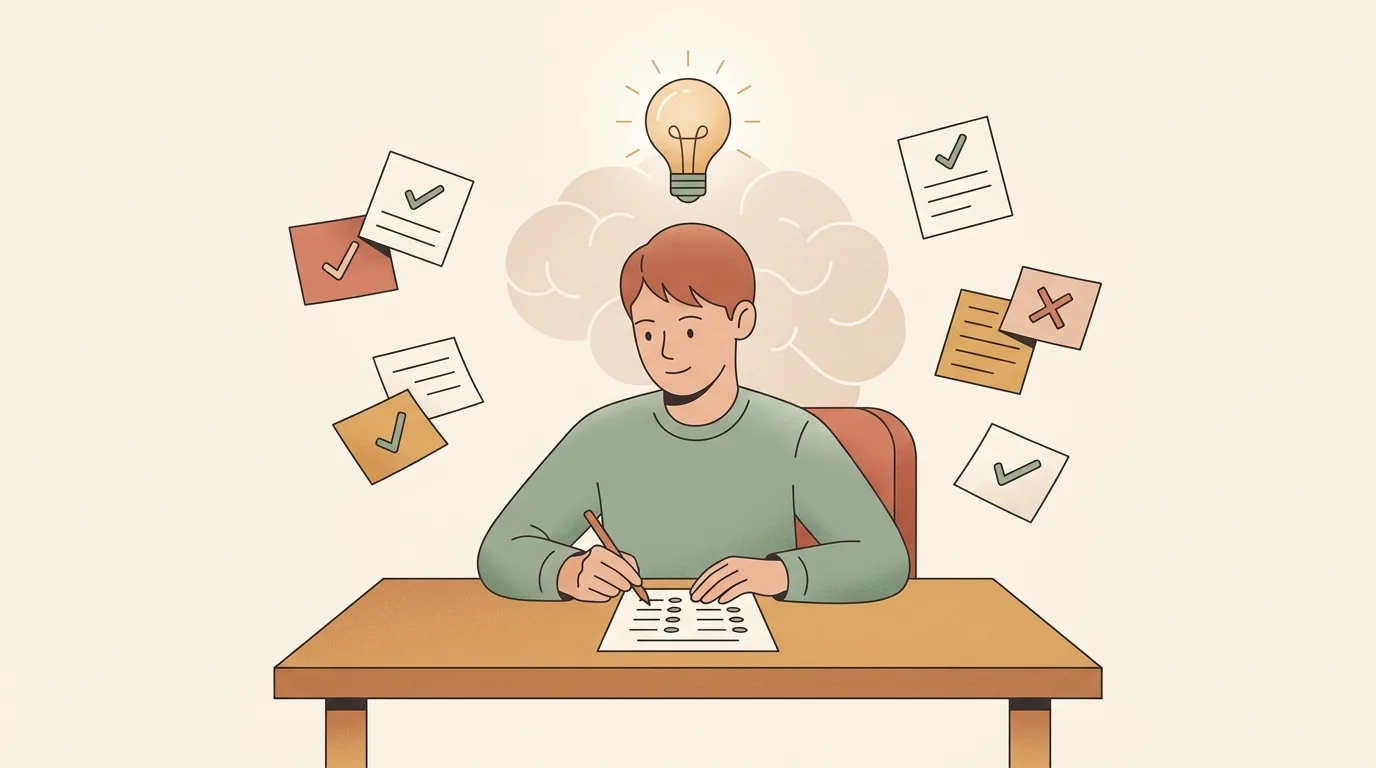
This is retrieval practice, the single most evidence-backed study technique. Roediger and Karpicke (2011) found that students who practiced retrieval remembered nearly 50% more after a week compared to students who re-read the same material.
If you have a study group, explain the topic out loud to someone else. Teaching reveals gaps faster than almost anything.
The goal isn't to finish reading. The goal is to be able to produce the answer from memory.
Day 5,6: Spaced Review of What You Learned
This is where most students stop. They go through material, feel okay about it, and move on. Then they sit down for the exam and draw a blank on things they thought they knew.
The fix is simple: come back to what you studied on Day 2 and Day 3.
On Day 5, pull out your notes from Day 2 and test yourself again, same topic, from memory, without looking. The act of re-retrieving strengthens the memory significantly more than re-reading ever could.
If you're using flashcards or a tool like Piply, this is exactly what spaced repetition handles automatically. You read today, the system surfaces what needs review before the exam, and you don't have to track it manually.
Day 7: Light Review, No New Content
The day before the exam isn't the time to start a new topic. Anything you've not touched by Day 6 is either low priority or too risky to cram at this point.
Review your green topics to keep them fresh. Do a quick pass on yellows. Accept that some reds won't be covered and that's fine.
Get sleep. The research on sleep and memory consolidation is unambiguous, pulling an all-nighter degrades the very retention you've been building all week.
The One Principle That Holds Across All Seven Days
The students who perform best under time pressure aren't the ones who read the most. They're the ones who practice retrieving the most.
Every study session should end with a retrieval test, a blank page, an explanation out loud, a set of flashcards, anything that forces you to produce the answer rather than recognize it.
Recognition feels like knowledge. Production is knowledge.
How to Use Piply in a Cram Week
Piply's Deep Research feature can pull a PDF of your lecture notes or textbook chapter and generate flashcards automatically, removing the manual card-creation step that makes retrieval practice feel like too much effort during an already compressed window.
The Study Sessions feature gives you a timed, structured environment so that Day 3 doesn't dissolve into three hours of half-focused reading followed by a YouTube spiral.
The spaced review system tracks what you've covered and surfaces what needs another pass before the exam. You don't have to manage the schedule yourself, you just show up and the system tells you what to focus on.
The Night Before
Stop studying an hour before bed. Give your brain time to consolidate what you covered today without new input.
Look over your practice questions one last time, then close everything. Sleep isn't passive. Your brain is actively processing and storing what you learned while you rest.
Students who sleep perform dramatically better than students who stay up, even when the sleep-deprived students technically studied longer.
Seven days is enough. Use them well.
Put the ideas into practice
Use Piply to organize materials and practise what you’re learning.
Try Piply